
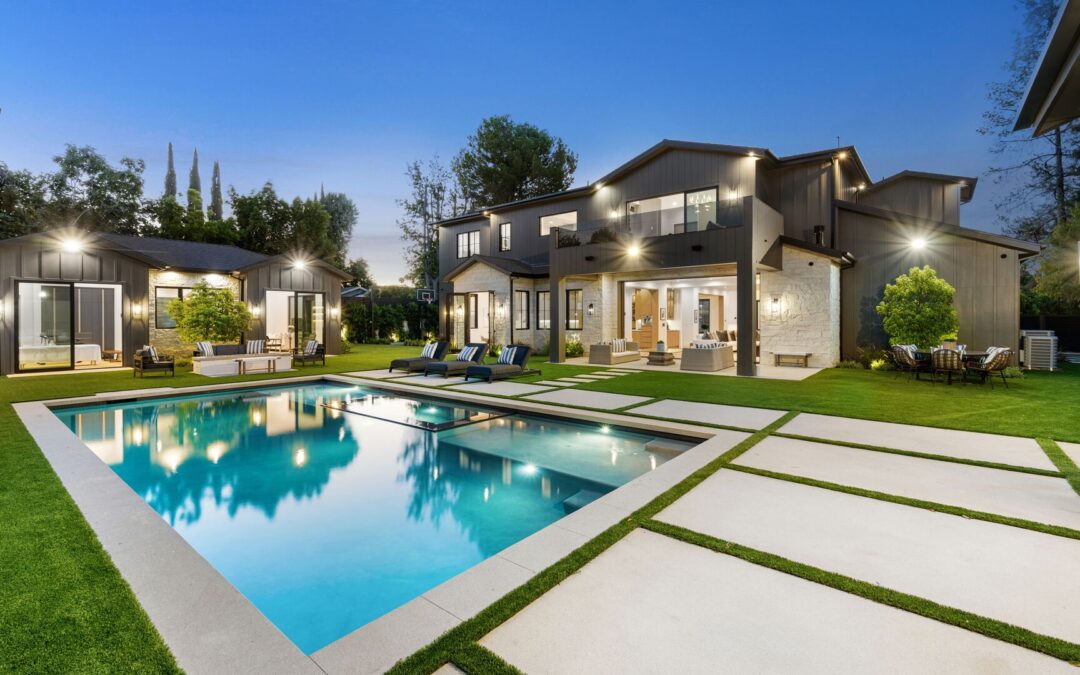
Your pool’s color is not water. That surprises a lot of Atlanta homeowners. Pool water is clear, so the color you see comes from what sits underneath and around it. The interior finish, the waterline tile, the depth, the sky, and even your trees all blend together to create that final shade. Get the combination right and your backyard looks like a resort. Miss the mark and a beautiful pool can read cold, muddy, or dated within a season.
This guide breaks down how finish and tile colors actually work, which materials hold up best in Georgia, and how to land on a look that fits both your home and our climate. We build pools across metro Atlanta, so everything here is grounded in what we see perform in real Georgia backyards, not just what looks good in a catalog.
Why Your Finish Color Decides Everything
The interior finish is the single biggest factor in your water color. Think of it as the canvas. Light surfaces bounce sunlight back and produce bright, tropical blues. Darker surfaces absorb light and create deep, rich tones that lean navy, emerald, or nearly black.
A white finish gives you that clean, pale aquamarine you see at beach resorts. Medium blues and grays push the water toward a true, saturated blue. Charcoal, deep blue, and black finishes turn the surface into something moody and reflective, almost like a mirror or a natural pond.
Depth plays into this too. The shallow end always reads lighter than the deep end, because there is less water and less surface beneath your eye. A tanning ledge in a dark-finished pool will glow a soft blue while the deep end goes inky. That gradient is part of the appeal, and good designers use it on purpose.
How the Atlanta Setting Changes the Picture
Here is where local conditions matter. Atlanta is a city of trees. Our neighborhoods, from the canopy streets of Druid Hills to the pine-shaded lots in Marietta and Alpharetta, put a lot of pools in partial or dappled shade. Shade changes everything about how a finish reads.
A dark finish in a heavily shaded yard can look gorgeous and dramatic, or it can look like a dark hole if there is never enough light to bring out the blue. Lighter finishes tend to stay cheerful even under tree cover. Sun-soaked yards in newer subdivisions are the opposite story. Full Georgia sun makes light finishes sparkle, but it can also create glare off a bright white surface.
Consider how your yard actually lives. Walk it at different times of day. Notice where the sun lands at noon and where the shade falls by late afternoon. The same finish sample will look like two different colors in those two spots. We always recommend testing samples in your actual yard, in real light, before committing. Wet the sample, too, since finishes shift color when submerged and almost always look darker under water than they do dry. Keep in mind that a small chip reads lighter than a full pool. Color deepens as it scales up across a large surface and into the deep end. A swatch that looks like a soft sky blue can finish as a rich, saturated blue once the whole pool is filled.
Surroundings reflect into the water as well. Red Georgia clay, green lawns, brick facades, and tall pines all throw color onto the surface. A pool tucked against a stand of dark pines reads cooler and greener than the same pool in an open, sky-filled yard.
The Main Finish Options, From Classic to Premium
Pool finishes fall into a few clear families. Each one carries a different price, lifespan, texture, and color range. Knowing the basics helps you spend wisely.
Plaster is the original and most affordable interior. It is a blend of white cement and marble dust, smooth underfoot, and available in white or tinted colors. White plaster gives that timeless light-blue water. The tradeoff is durability. Plaster is more porous than the alternatives, so it stains and shows algae more readily, and it typically needs refinishing sooner than aggregate or tile.
Quartz aggregate is the popular step up. Crushed quartz is blended into the cement along with color, creating a surface that resists chemicals and stains far better than plain plaster. Quartz adds a subtle sparkle that catches the light, and it holds its color well. For many Atlanta families, quartz is the sweet spot of cost, looks, and longevity.
Pebble finishes use small river stones for a natural, textured surface. Brand names like PebbleTec and StoneScapes fall in this group. These finishes are extremely durable, often lasting fifteen to twenty years or more, and their texture resists algae and adds slip resistance. Pebble blends produce some of the most striking water colors, from white-sand lagoon tones to deep tropical blues. The texture is slightly rougher on bare feet, which some people love and others do not.
Glass bead finishes sit at the premium end. Tiny glass spheres are mixed into the surface, producing a smooth feel and a brilliant, three-dimensional sparkle. Glass is non-porous, highly resistant to algae and chemical damage, and stunning under LED lighting at night. The look suits modern designs especially well. You pay more, but the depth of color and shimmer is hard to match.
Full tile interiors are the top of the market. Tile is the longest-lasting and easiest-to-clean surface available, and it delivers a level of glamour the others cannot. Cost is the catch, since a fully tiled pool is the most expensive option by a wide margin. Most homeowners reserve tile for accents and the waterline rather than the entire interior.
Tile: The Detail That Frames the Whole Pool
Tile usually shows up at the waterline, on steps, on a tanning ledge, or wrapped around a spa. That waterline band is small, but it frames the entire pool and sets the design tone. Choosing it well pays off every single day.
There are four common tile materials, and each brings something different.
Ceramic tile is the most economical. It can be glazed, patterned, or even hand-painted, which makes it a favorite for Mediterranean and Spanish-style pools that suit a lot of Atlanta homes. Ceramic is a little less durable than the others, but for a waterline accent it performs beautifully.
Porcelain is a touch tougher than ceramic and carries a glass-like sheen. It comes in nearly endless patterns, and textured versions add slip resistance on steps. Porcelain is the standard workhorse for waterline tile, and for good reason.
Glass tile is the showstopper. It is non-porous, exceptionally durable, and reflects light in a way no other material does. Iridescent glass mosaics in blues, greens, and teals create a jewel-like waterline that shimmers in the sun and glows under night lighting. Glass costs the most, but a thin band of it transforms a pool.
Stone tile brings an organic, earthy feel. Travertine, limestone, granite, and sandstone all read natural and warm, and they pair perfectly with the wooded, traditional settings common around Atlanta. Stone resists salt water and ages gracefully, though it usually needs sealing to stay its best.
Matching the Look to Your Home
A pool should feel like it belongs to the house behind it. Atlanta’s housing mix is broad, so the right palette varies a lot from one street to the next.
Traditional brick homes and Craftsman bungalows tend to look best with classic tones. White or light-blue plaster and quartz, paired with a warm stone or earth-toned porcelain waterline, feels settled and timeless. These pairings age well and rarely look dated.
Modern and transitional builds, the kind filling intown Atlanta and newer luxury subdivisions, can carry bolder choices. Charcoal and deep-blue finishes, clean glass-tile waterlines, and crisp geometric shapes lean contemporary and dramatic. A black-bottom pool against a modern facade looks intentional and high-end.
Mediterranean and Spanish-influenced homes invite color and pattern. Hand-painted ceramic accents, warm blue-green water, and decorative tile work nod to that sun-drenched style without feeling like a theme park.
The goal is harmony, not matching. Your finish and tile should echo your home’s materials and palette rather than copy them exactly.
Does a Dark Pool Really Get Hotter in Georgia?
This question comes up constantly, especially given our summers. The short answer is yes, but only a little. Darker finishes do absorb more solar energy than light ones, while light finishes reflect more of it away. That part is simple physics.
The real-world effect, though, is modest and often overstated. Industry pros and manufacturers generally peg the difference at roughly a degree or a few degrees at most, and plenty of experts argue it is barely noticeable. Other factors swamp the finish color entirely. Sun exposure, pool depth, shade from your trees, wind, evaporation, and whether you run a heater or a cover all matter far more than the shade of your plaster.
So what does that mean for an Atlanta homeowner? Do not pick a dark finish just to heat the water, because the boost is small. You should not avoid a dark finish out of fear it will overheat your pool either, because it will not turn your backyard into a hot tub. Choose your color for how it looks in your yard. The temperature difference is a footnote, not a headline.
Practical Notes for Georgia Pools
A few real-world details deserve attention before you finalize a color.
Maintenance shows differently on different shades. The waterline collects the most buildup, from calcium scale to our infamous spring pollen film. Very dark tile can highlight a chalky scale line, while very light tile can show a yellow pollen ring. Mid-tone and textured or patterned tiles tend to hide everyday residue best between cleanings. None of this is a dealbreaker, but it is worth knowing if low fuss is a priority.
Fading is another consideration. All finishes eventually wear, and some colored products fade faster than others under strong sun. Quartz, pebble, and glass generally hold color better than basic tinted plaster. Ask your builder about the specific product’s track record in full Georgia sun.
Lighting deserves a thought too. Our long, warm evenings make pools a nighttime gathering spot for much of the year. Sparkle finishes like quartz and glass beads, and glass tile accents, come alive under modern LED lights. If you entertain after dark, factor that in early.
Water color also shifts with your chemistry and your finish’s age. A fresh finish looks brightest, and color softens a bit as the surface cures and ages. That is normal, so plan for the settled look rather than the day-one look.
Putting It All Together
Picking pool colors feels like a small decision until you realize you will look at the result every day for the next decade or two. Start with the canvas, your interior finish, since it drives the water color more than anything else. Layer in a waterline tile that frames the pool and ties it to your home. Test real samples in your real yard, in both sun and shade, before you commit. Then let the Georgia setting, your home’s style, and your own taste guide the final call.
The most successful Atlanta pools are not the ones chasing a trend. They are the ones that feel inevitable in their setting, where the water color, the tile, the house, and the landscape all belong together. A charcoal pebble pool can be perfect in a shaded modern backyard. Equally, a light-blue quartz pool can be just as perfect against a brick traditional home in full sun. Neither is more correct. The right answer is the one that fits your space.
At TPS Pools and Landscaping, we help Atlanta homeowners work through these choices with samples, real-light testing, and an honest read on how each option performs in our climate. If you are planning a new build or a resurfacing project and want your pool to look right for years, not just on opening day, reach out and let us help you design the look that fits your backyard.
This guide is for general educational purposes. Finish and tile products vary by manufacturer, so confirm specifics, warranties, and care requirements with your pool professional before choosing.