
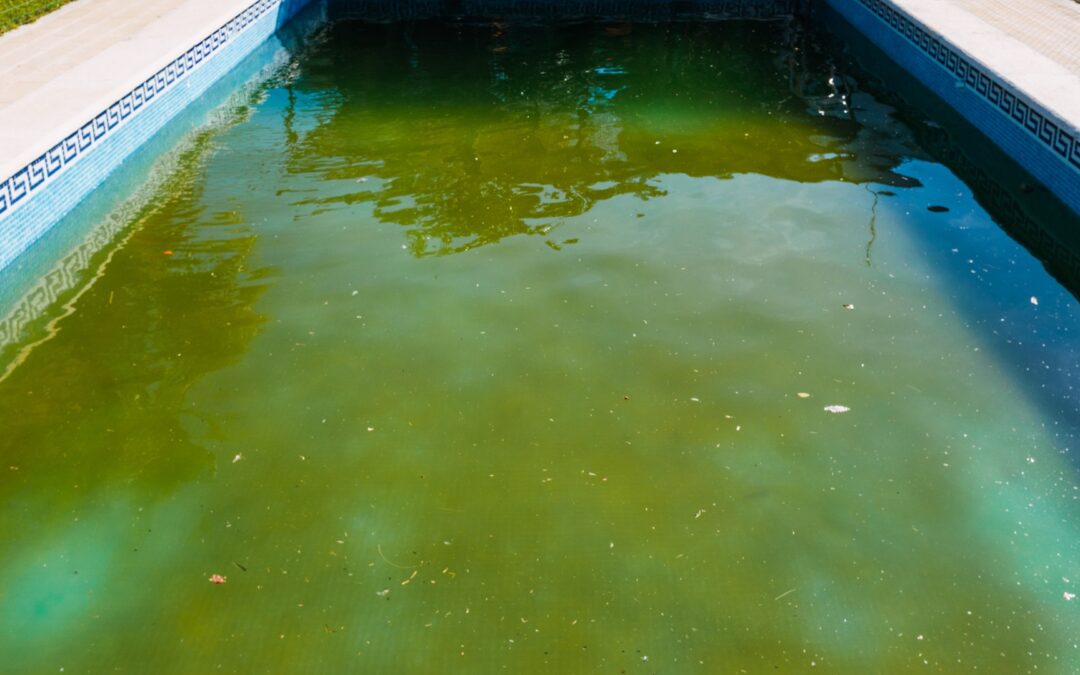
Few things ruin a Georgia summer weekend faster than walking out to your backyard and finding your pool has turned green overnight. One day the water is sparkling, the next it looks like a pond. If you have owned a pool here for more than a season, you already know that our climate is practically engineered to grow algae. Long, hot summers, high humidity, heavy spring pollen, and frequent afternoon thunderstorms all create the perfect storm for a bloom. The good news is that algae is almost always preventable, and even a fully green pool can usually be cleared in a few days if you attack it the right way.
This guide walks through why Georgia pools are so prone to algae, how to recognize the different types, the exact step by step process to clear a green pool fast, and the habits that keep it from coming back. The chemistry here is the same anywhere, but the timing and intensity matter more in our heat, so we have written it with Georgia conditions in mind.
Why Georgia Pools Turn Green So Easily
Algae are microscopic plants that are always present in small amounts. They float in on the wind, ride in on swimsuits and toys, and wash in with rain and debris. They only become a visible problem when conditions let them multiply faster than your sanitizer can kill them. In Georgia, those conditions show up constantly.
Heat is the biggest factor. Warm water speeds up algae growth dramatically, and it also burns through chlorine faster. When water temperatures climb into the upper 80s during a Georgia July, your pool is both more inviting to algae and less protected at the same time. Sunlight compounds the problem, because ultraviolet rays break down unprotected chlorine quickly, sometimes losing several parts per million in a single sunny afternoon.
Then there is our weather pattern. Georgia summers bring near daily pop up thunderstorms. Rain is slightly acidic, dilutes your chemistry, and carries in nitrogen, dust, and fresh algae spores. A single heavy storm can knock your carefully balanced water out of range and feed a bloom overnight. Spring adds another challenge: the famous yellow blanket of pollen that coats everything in metro Atlanta. Pollen and other organic debris give algae food and consume chlorine as your sanitizer works to oxidize all that material instead of guarding against algae.
Finally, circulation and consistency matter. Pools that do not run their pump long enough, have a dirty filter, or go a few days with low or inconsistent chlorine give algae the exact opening it needs. In cooler climates you might get away with a lazy week. In Georgia heat, a green pool can appear in 24 to 48 hours.
Know Your Enemy: The Three Types of Pool Algae
Not all algae are the same, and knowing which type you are dealing with determines how hard you will have to work.
Green algae is by far the most common and the easiest to treat. It clouds the water, tints it green, and feels slimy on the walls and floor. And its what most people picture when they think of a green pool. It responds well to a strong dose of chlorine combined with brushing and good filtration.
Mustard algae, sometimes called yellow algae, is sneakier and more stubborn. It looks like a dusting of yellow or brownish sand or dirt, usually settling on the floor, steps, or shaded walls in areas of poor circulation. It brushes away easily but tends to come right back, and it is notably more resistant to normal chlorine levels than green algae. Mustard algae loves the shady, low flow corners of a pool and often needs a higher chlorine dose plus a specialized algaecide to fully clear.
Black algae is the toughest of the three. It appears as dark, raised spots that root themselves into the surface, especially in plaster and gunite pools, and it favors corners, steps, and other spots with low circulation. Its roots and protective outer layer make it highly resistant to chlorine, so beating it requires aggressive brushing, often with a stiff or stainless brush, repeated heavy shocking, and patience. Black algae is the one situation where calling in a professional early often saves you weeks of frustration.
Get Your Chemistry Right First
Before you dump anything in the water, understand the numbers that govern whether your chlorine can actually do its job. Adding more chlorine to a pool with bad chemistry is like flooring the gas with the parking brake on.
Free chlorine is your active sanitizer. For everyday Georgia conditions, many pool owners aim for the higher end of the normal range, around 3 to 5 parts per million during peak heat, rather than the bare minimum. Public health guidance from the CDC sets the floor at 1 part per million for pools without stabilizer and 2 parts per million for pools that use stabilized chlorine, but in our climate keeping a comfortable cushion above those minimums is what prevents blooms in the first place.
pH controls how effective that chlorine is. The target range is 7.2 to 7.8, with many pros aiming for 7.4 to 7.6. This matters enormously for algae, because chlorine loses a large share of its killing power as pH climbs. Chlorine at a reading that looks fine on paper can be operating at a fraction of its potential if your pH has drifted up toward 8.0. When you are fighting algae, getting pH down toward the lower end of the range, around 7.2 to 7.4, makes every bit of chlorine work harder.
Total alkalinity should sit between roughly 80 and 120 parts per million. It acts as a buffer that keeps your pH from swinging wildly, which is especially helpful after our heavy summer rains.
Cyanuric acid, also called stabilizer or conditioner, is the quiet variable that trips up a lot of Georgia pool owners. Stabilizer protects chlorine from the sun, which is genuinely useful here, but too much of it locks up your chlorine and makes it sluggish. The commonly recommended range for outdoor pools is about 30 to 50 parts per million. The catch is that chlorine tablets, the trichlor pucks many people use, slowly add cyanuric acid every time they dissolve. Over a long Georgia season of constant tablet use, stabilizer can creep up to 80, 100, or higher without you noticing. When that happens, your chlorine becomes increasingly ineffective and algae gets the upper hand, and clearing a bloom becomes much harder and more expensive. If you battle recurring algae despite decent chlorine readings, test your cyanuric acid. If it is high, the only practical fix is to drain and replace part of the water to dilute it.
Calcium hardness, while not directly an algae issue, rounds out balanced water and should generally fall between 200 and 400 parts per million for most pools.
How to Clear a Green Pool Fast: Step by Step
When your pool has gone green, speed and thoroughness win. Here is the proven sequence.
Step one: clean out the debris. Skim off leaves, pollen mats, and anything floating, and remove large debris from the bottom with a leaf rake. The less organic material in the water, the less your chlorine has to fight.
Step two: test and adjust your chemistry. Test pH, alkalinity, and cyanuric acid. Bring pH down toward 7.2 so your chlorine can work at full strength. If your stabilizer is very high, recognize that you may need to dilute the water for the treatment to succeed.
Step three: brush every surface. Use a pool brush to scrub the walls, floor, steps, and especially the shady corners and behind ladders. Brushing breaks up the algae and exposes it to the chlorine you are about to add. For mustard and black algae, brush aggressively and brush often.
Step four: shock with a heavy dose of chlorine. This is the core of the treatment. Use an unstabilized shock, such as calcium hypochlorite or liquid chlorine, rather than stabilized products like trichlor or dichlor, because the stabilized versions would pile more cyanuric acid into water that already needs the opposite. A standard maintenance shock is roughly one pound of calcium hypochlorite per 10,000 gallons, but algae calls for much more. A light green bloom typically needs a double dose, mustard algae a triple dose, and black algae even more. Many professionals push free chlorine well up into the range of 20 to 30 parts per million to reach what is called breakpoint, the level that overwhelms and destroys the algae. Always follow the product label, add shock in the evening so the sun does not immediately burn it off, and pre dissolve granular shock in a bucket of water if the manufacturer directs, while never mixing different chemicals together.
Step five: run your filter continuously. Keep the pump running 24 hours a day during treatment. Circulation distributes the chlorine and lets the filter pull out dead algae. This is not the time to save on your Georgia Power bill. The filter is doing half the work.
Step six: hold the chlorine high and keep brushing. Algae is not beaten in one shot. Test daily, brush daily, and add chlorine as needed to keep the level elevated until it stops dropping quickly and the water begins to clear. A pool that keeps eating chlorine still has live algae. You may need to shock again, waiting roughly 12 hours between heavy doses. Stay with it until the chlorine holds steady overnight.
Step seven: clear the cloudiness. As the algae dies, your water will usually turn from green to cloudy white or gray. Counterintuitive as it looks, this is a good sign, because cloudy water is dead algae. Keep filtering. Vacuum the settled debris off the bottom, ideally to waste if you have a multiport valve and a lot of material, so you are not just recirculating it. A pool clarifier can help your filter grab the fine particles faster.
Step eight: clean the filter. All that dead algae clogs your filter media. Backwash a sand or diatomaceous earth filter, or hose off and deep clean a cartridge filter, once the water is clear. A dirty filter will keep the water hazy and can reseed problems.
Step nine: consider algaecide and phosphate control for stubborn cases. For mustard and black algae especially, a quality algaecide applied after the chlorine has come back down to normal levels helps finish the job and prevent a quick return. Note the timing: very high chlorine can deactivate many algaecides, so they generally go in after the heavy shocking phase, not during it. If you fight algae again and again, test for phosphates, which are algae food. When phosphate levels get very high, a phosphate remover can take away the fuel, though it will not clear an active bloom on its own.
A light green pool treated promptly often clears within 24 to 72 hours. A heavy bloom, mustard, or black algae can take several days to a couple of weeks of diligent effort.
A Note for Saltwater Pool Owners
Saltwater pools are still chlorine pools. The salt cell generates chlorine, but during an algae bloom in Georgia heat, the cell usually cannot produce enough fast enough to win. Use your system’s super chlorinate or boost setting, but do not rely on it alone. Add supplemental liquid chlorine to reach shock levels, follow the same brushing and filtering steps above, and check that your cell is clean and your stabilizer is not running high, since salt pools are just as vulnerable to creeping cyanuric acid.
Safety When Handling Pool Chemicals
Pool chemicals are powerful and deserve respect. Never mix different chemicals together, and never combine chlorine products with acid or with algaecide directly, as the reactions can produce dangerous gases. Always add chemical to water rather than water to chemical, add products one at a time with the pump running, and store everything in a cool, dry, well ventilated place away from each other and out of reach of children and pets. Keep everyone out of the pool while chlorine is at shock levels, and wait until free chlorine drops back to a safe range, generally below about 4 parts per million or whatever your test kit and product label indicate, before swimming again.
Preventing the Green: Habits That Keep Georgia Pools Clear
Clearing a green pool is satisfying, but never needing to is better. Prevention in Georgia comes down to consistency during a long and demanding season.
Keep chlorine steady and a little higher in peak heat. Do not let it dip, especially during heat waves and after heavy use. Test two or three times a week in summer, more often during a stretch of hundred degree days. Run your pump long enough each day for good turnover, commonly eight to twelve hours in summer, and make sure water is reaching every corner. Brush the walls and floor weekly, paying attention to shady, low circulation spots where mustard and black algae like to start. Keep your filter clean and your skimmer baskets empty, particularly during pollen season and after storms.
Build a habit of shocking proactively after the events that stress Georgia pools: a big pool party, a heavy rainstorm, or a thick coating of spring pollen. A maintenance shock at those moments resets your sanitizer before algae can gain a foothold. Watch your cyanuric acid over the season so tablet use does not slowly choke your chlorine, and dilute the water if it climbs too high. Together, these habits cost a fraction of the time, money, and frustration of fighting a full bloom in the middle of July.
When to Call a Professional
Most green algae blooms are a manageable do it yourself project if you act quickly and follow the steps. But there are times to bring in help. Black algae rooted into your plaster, mustard algae that keeps returning no matter what you do, water that stays green after repeated shocking, or chemistry readings that simply will not balance are all signs of an underlying issue, whether that is high stabilizer, a failing filter, a circulation dead zone, or an algae variety that needs specialized treatment. A pool professional can diagnose the root cause, treat it correctly, and save you from pouring money into chemicals that are not solving the real problem.
At TPS Pools and Landscaping, we help Georgia homeowners keep their pools clear all season long, from emergency green to clean recoveries to routine service that prevents blooms before they start. Our climate makes algae a constant possibility, but with the right chemistry, consistent care, and a fast response when you see that first tint of green, your pool can stay sparkling from the first warm day in spring through the last swim of October.
This guide is for general educational purposes. Always follow the instructions on your specific pool chemicals and equipment, and consult a pool professional for problems specific to your pool.