
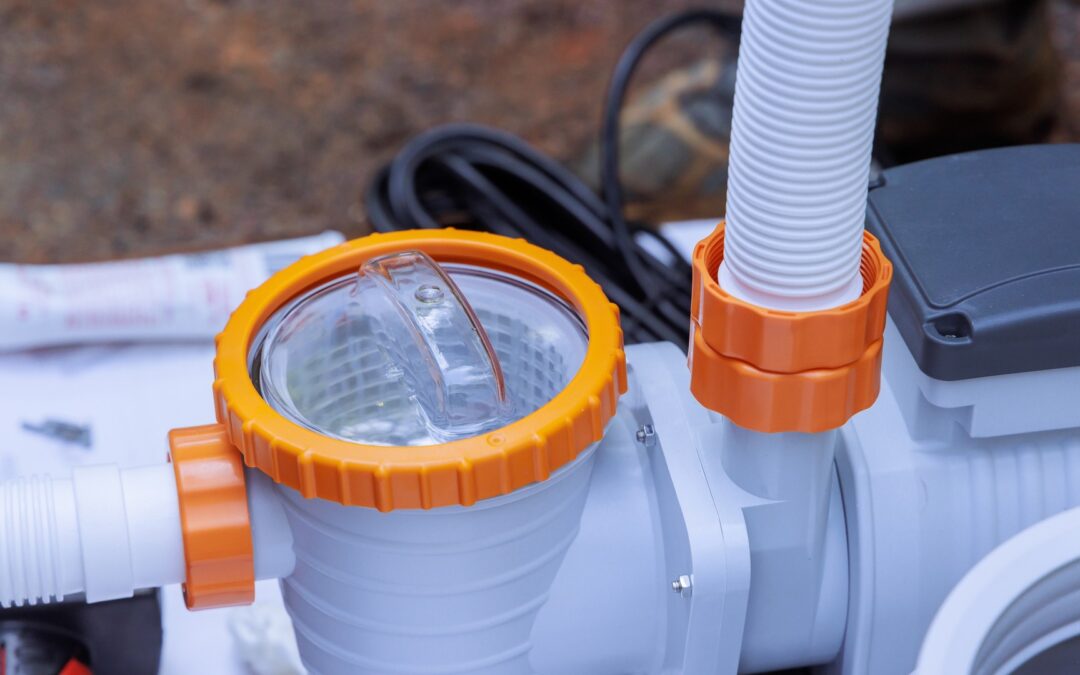
A backyard pool is one of the best ways to survive a Georgia summer. When the heat index pushes past 100 degrees and the humidity makes it feel like you are breathing through a wet towel, there is nothing better than stepping off the deck and into cool water. But that relief comes at a cost, and for many Georgia homeowners, the pool pump is quietly responsible for a much larger share of the electric bill than they realize.
If your Georgia Power bill spikes every summer and you cannot figure out why, your pool pump deserves a hard look. It may be the single biggest energy drain in your home outside of your HVAC system.
How Much Energy Does a Pool Pump Actually Use?
Most residential pools in Georgia use a single-speed pump. These pumps typically draw between 1,500 and 2,500 watts while running. A standard 2-horsepower single-speed pump pulling around 2,000 watts and running for eight hours per day will consume roughly 480 kilowatt-hours (kWh) per month. Over the course of a year, that adds up to somewhere between 3,000 and 5,000 kWh depending on how many hours you run it and the size of the motor.
To put that in perspective, the average Georgia household uses about 1,035 kWh per month total. That means a single-speed pool pump running eight hours a day can account for nearly half of a typical household’s monthly electricity usage all by itself. Industry data suggests pool pumps commonly represent 20 to 30 percent of a pool owner’s total electricity bill.
At Georgia’s average residential electricity rate of roughly 14 cents per kWh, that 480 kWh per month from a single-speed pump costs you approximately $67 per month, or about $800 per year. And that is a conservative estimate. Many pool owners run their pumps longer than eight hours, and many pumps draw more than 2,000 watts.
Why Georgia Power’s Rate Structure Makes This Worse
Georgia Power’s standard residential tariff uses a tiered pricing structure during the summer months of June through September. The first 650 kWh you use in a billing cycle costs 8.6 cents per kWh. Usage between 650 and 1,000 kWh jumps to 14.3 cents per kWh. And anything above 1,000 kWh costs 14.8 cents per kWh. From October through May, the rate is a flat 8.1 cents per kWh.
This tiered structure is where pool pumps really start to hurt. Your air conditioning is already pushing your household well past the 650 kWh threshold during a Georgia summer. Every additional kWh your pool pump uses is likely being billed at the highest tier of 14.8 cents. That same 480 kWh from your pool pump, when it is all being charged at the top tier, costs you about $71 per month rather than the $41 you would pay if it were all charged at the lowest tier.
Georgia Power’s peak period runs from 2:00 p.m. to 7:00 p.m. on weekdays during June through September. If you are on a time-of-use rate plan like Nights and Weekends or Smart Usage, running your pool pump during those afternoon hours costs significantly more per kWh than running it at night or on weekends. On the Overnight Advantage plan, for example, on-peak energy is billed at 29.8 cents per kWh while super off-peak overnight hours (11:00 p.m. to 7:00 a.m.) are billed at a fraction of that cost. Running a pool pump during peak afternoon hours on that plan could cost you three to four times what it would cost to run the same pump overnight.
The Single-Speed Pump Problem
The root of the problem for most Georgia pool owners is the single-speed pump itself. A single-speed pump has one setting. It runs at maximum RPM every time it turns on, typically around 3,450 RPM. It does not matter whether your pool needs heavy filtration after a storm or just gentle circulation on a calm Tuesday. The pump runs at full blast regardless.
This is like driving your car at 90 miles per hour everywhere you go, including the school drop-off line and the Publix parking lot. You are burning far more fuel than the task requires.
The physics behind this waste are described by the pump affinity law, which states that when you cut a pump motor’s speed in half, you reduce its energy consumption by a factor of eight. That is not a typo. The relationship between pump speed and energy use is cubic, not linear. A small reduction in RPM produces a dramatic reduction in electricity consumption.
A single-speed pump has no way to take advantage of this. It runs at full speed or it does not run at all.
The Variable-Speed Pump Solution
A variable-speed pump uses a permanent magnet motor that can operate across a wide range of speeds, typically from around 600 RPM up to 3,450 RPM. You can program it to run at low speeds for extended periods, circulating and filtering the water gently throughout the day, and then ramp up to higher speeds only when needed for tasks like running a pool cleaner or backwashing the filter.
The energy savings are substantial. A variable-speed pump running at low speed might draw only 200 to 500 watts per hour compared to the 1,500 to 2,500 watts a single-speed pump draws. According to data from the U.S. Department of Energy, switching from a single-speed pump to a variable-speed pump can reduce pool pump energy consumption by up to 80 percent.
In practical terms, a variable-speed pump might use roughly 72 kWh per month compared to 480 kWh for a comparable single-speed unit running the same number of hours. At Georgia’s higher summer tier rate, that is a difference of roughly $60 per month, or over $700 per year in electricity savings.
The upfront cost of a variable-speed pump is higher. Expect to pay somewhere between $800 and $1,500 for the pump itself, plus installation. But at $60 or more per month in savings during the swimming season, most Georgia homeowners recoup that investment within 12 to 24 months. After that, the savings go straight back into your pocket.
Variable-speed pumps also run quieter, produce less wear and tear on your pool’s plumbing and filter, and often result in better water clarity because the extended low-speed circulation distributes chemicals more evenly.
Five Things Georgia Pool Owners Can Do Right Now
You do not have to buy a new pump tomorrow to start saving money. Here are five steps that can reduce your pool pump’s impact on your Georgia Power bill starting this week.
Reduce your daily run time. The U.S. Department of Energy recommends starting with six hours of filtration per day instead of the commonly programmed eight. If your water stays clear, keep it there. If it gets cloudy, increase by 30-minute increments until you find the minimum run time that keeps your pool clean. Every hour you shave off saves you roughly $2 to $3 per day during the Georgia summer at top-tier rates.
Shift your pump schedule off-peak. If you are on Georgia Power’s standard residential rate, the time of day does not affect your per-kWh price, but it does affect your overall usage during peak cooling hours, which can push you into higher tiers faster. If you are on a time-of-use plan like Nights and Weekends or Overnight Advantage, the savings from running your pump during off-peak or super off-peak hours are direct and significant. Program your pump timer to run overnight or in the early morning hours.
Clean your filter regularly. A dirty or clogged filter forces your pump to work harder to push water through the system, drawing more electricity in the process. Cleaning or replacing your filter on schedule is one of the simplest ways to keep your pump operating efficiently.
Check your pump for signs of wear. If your pump is making unusual noises, vibrating excessively, struggling to prime, or running hot, it is likely consuming more electricity than it should. A pump motor that is on its way out often draws more current as it struggles to maintain speed. If your pump is more than seven years old and showing any of these signs, it is time to start shopping for a replacement.
Evaluate your Georgia Power rate plan. Georgia Power offers seven residential rate plans, and the best one for you depends on when and how you use electricity. If you can shift significant usage to overnight hours, the Overnight Advantage plan could save you real money. Georgia Power’s online Residential Rate Advisor tool can help you compare options based on your actual usage history. It is worth spending 15 minutes with that tool before the summer billing season kicks in.
Consider Your Rate Plan Carefully
Many Georgia Power customers stay on the default standard residential rate (Schedule R-22) without ever exploring whether another plan might save them money. For pool owners, this is a missed opportunity.
The Nights and Weekends plan charges lower rates during off-peak hours, which includes all hours outside of the 2:00 p.m. to 7:00 p.m. weekday window from June through September, plus all weekend hours. If you can run your pool pump, laundry, and dishwasher outside that five-hour weekday window, you may come out ahead.
The Overnight Advantage plan goes further, offering the lowest rates between 11:00 p.m. and 7:00 a.m. year-round. For pool owners with a timer on their pump, this is a natural fit. Set the pump to run from 11:00 p.m. to 5:00 a.m. or 6:00 a.m. and you are filtering your pool at the cheapest possible rate.
The Smart Usage plan includes a demand component, charging you based on your single highest hour of electricity usage during the billing period. Pool owners need to be careful with this plan. If your pump kicks on at the same time as your air conditioning and your dryer, that demand spike could cost you. But if you stagger your usage well, the low off-peak energy rate of just 1.5 cents per kWh can produce real savings.
Each plan requires a 12-month commitment, so do your homework before switching. Georgia Power’s rate advisor tool uses your actual usage data to estimate what you would pay under each plan.
The Bigger Picture
Georgia Power’s average residential customer now pays about $171 per month across the full year, with July bills averaging around $266 due to summer cooling demand. For pool owners, those numbers are often higher because the pool pump adds a baseline load that runs month after month during the swimming season.
The good news is that pool pump efficiency is one of the most actionable ways to bring that bill down. Unlike your air conditioning, which you need to run for comfort and health during a Georgia summer, your pool pump’s energy consumption can be cut dramatically through scheduling changes, maintenance, and equipment upgrades without any reduction in water quality.
If you are a Georgia homeowner with a pool and your summer power bills have been climbing, start with the pump. Check your daily run time. Look at when the pump is scheduled to run relative to peak hours. Inspect the filter. And if you are still running a single-speed pump, price out a variable-speed replacement and do the math on your payback period. For most Georgia pool owners, the numbers make a compelling case.
Your pool should be a source of relief during the summer, not a source of stress when the power bill arrives. A few smart changes to how you run your pump can make sure it stays that way.