
Spring has arrived in Georgia, and if you own a pool, you already know what that means. Pollen is settling on every surface. Temperatures are climbing fast. And your pool equipment is about to run almost nonstop for the next seven or eight months.
Georgia’s humid subtropical climate creates one of the longest pool seasons in the country. Most homeowners in the Atlanta metro and surrounding areas open their pools in late March or early April, and many don’t close until well into October. Some with heated pools or spas push even further. That extended season is great for swimming, but it also means more hours of equipment runtime, more chemical consumption, more energy cost, and more maintenance headaches.
Pool automation technology has come a long way in a short time. In 2026, the systems available to residential pool owners are more capable, more affordable, and more practical than what existed even two or three years ago. But not every upgrade is worth the money, and not every product lives up to the marketing. This guide breaks down the automation categories that matter most for Georgia pool owners, what they actually cost, and where you’ll see real returns on your investment.
Smart Control Systems: The Central Hub
At the core of any automated pool is a smart control system. This is the hardware and software that ties your pump, heater, lights, sanitizer, and water features together under one interface. Instead of walking out to your equipment pad and manually adjusting valves and timers, you manage everything from a smartphone app, a wall-mounted panel, or a voice assistant.
The major players in this space are well established. Pentair’s IntelliCenter, Hayward’s OmniLogic, and Jandy’s iAquaLink are the three platforms you’ll encounter most often when talking to pool builders and service techs in Georgia. All three offer app-based control, scheduling, and real-time alerts. All three integrate with Amazon Alexa and Google Home for voice commands. And all three can be retrofitted onto existing pools or built into new construction.
What separates them comes down to interface design, ecosystem compatibility, and how many devices you need to control. A straightforward pool with a single pump, heater, and light package needs far less automation horsepower than a resort-style backyard with multiple pumps, a spa, water features, and layered lighting zones.
For an all-in-one control system, expect to spend between $1,500 and $5,000 or more for equipment, depending on how many components you need to automate. Professional installation adds to that, though the cost is lower if you’re building a new pool and the wiring and plumbing can be planned from the start. Retrofitting an older pool involves more labor for conduit runs and electrical connections.
The real question is whether that cost is justified. For Georgia pool owners running equipment seven to nine months a year, the answer is almost always yes. Scheduling alone can cut your energy usage significantly. Instead of your pump running at full speed around the clock, a smart controller paired with a variable-speed pump can optimize run times based on actual need. That leads directly into the next category.
Variable-Speed Pumps and Energy Savings
If you still have a single-speed pump on your Georgia pool, replacing it with a variable-speed pump (VSP) is probably the single best investment you can make, automated or otherwise.
Single-speed pumps have one setting: full power, all the time. They consume enormous amounts of electricity. A variable-speed pump adjusts its motor speed based on what the pool actually needs at any given moment. Lower speeds for daily circulation. Higher speeds for cleaning cycles. The energy savings are dramatic. Industry sources consistently report that variable-speed pumps use 80 to 90 percent less energy than their single-speed predecessors.
In Georgia, where pools run for extended seasons and summer electricity bills can spike hard, those savings add up quickly. The Department of Energy has noted that pool heat pump systems in Atlanta cost roughly $1,100 per year to operate, but that figure depends on efficient supporting equipment. A variable-speed pump paired with a smart controller that manages scheduling and speed settings can reduce your overall pool energy costs by 30 to 50 percent or more.
Pentair’s IntelliFlo3 VSF, Hayward’s TriStar VS, and Jandy’s ePump are all proven models that work with their respective automation platforms. If you’re pairing a new pump with a new control system from the same manufacturer, the integration is seamless. But even standalone variable-speed pumps with built-in Wi-Fi and their own apps can deliver most of these benefits without a full automation overhaul.
A quality variable-speed pump typically costs between $1,000 and $2,500 before installation. In a state where you’re running the pump for eight or nine months, most homeowners see a payback period of one to three years through energy savings alone. This is the most straightforward win in pool automation.
Automated Chemistry Monitoring and Dosing
Water chemistry management is where Georgia’s climate creates the most persistent challenges. High heat accelerates chlorine breakdown. Summer UV exposure degrades sanitizer levels throughout the day. Humidity promotes algae growth. Heavy spring pollen loads and fall leaf debris introduce phosphates and organic material that throw off your chemical balance. Afternoon thunderstorms dilute pool water and shift pH levels in a matter of hours.
Manually keeping up with all of that means testing your water two or more times per week during swim season, making trips to the pool supply store, and dosing chemicals by hand. It is tedious and error-prone. Over-chlorinating irritates skin and eyes. Under-chlorinating opens the door to bacteria and algae blooms.
Automated chemistry systems fall into two broad categories: monitors and controllers.
Monitors are passive devices that track your water chemistry in real time and send data and recommendations to your phone. Products like the ICO Pool Water Monitor, WaterGuru SENSE, and the Crystal Water Monitor sit in your pool or skimmer and measure parameters like pH, ORP (oxidation-reduction potential), temperature, and in some cases total dissolved solids. They alert you when something drifts out of range and tell you exactly what to add and how much. The ICO tracks four key factors and provides recommendations through a smartphone app, with historical data logging so you can spot seasonal trends. The WaterGuru SENSE measures up to five chemistry parameters daily, including free chlorine, pH, cyanuric acid, total alkalinity, and hardness. These devices typically cost between $300 and $500 and have no ongoing subscription fees.
Controllers go a step further. Systems like Pentair’s IntelliChem don’t just monitor your water. They actively dispense the right amount of chemicals to maintain your target levels. The IntelliChem continuously monitors pH and sanitizer levels and adjusts chemical delivery through dosing pumps. It includes a built-in Langelier Saturation Index calculator that tells you when your overall water balance is in or out of spec. These types of controllers are more expensive, typically $1,000 to $2,500 installed, and they require a supply of liquid chlorine and acid that the system can draw from. But for Georgia pool owners who are tired of the constant chemistry juggling act, the time savings and consistency are substantial.
The financial case is also solid. Precise automated dosing reduces chemical waste. You’re only adding what the water actually needs, when it needs it. Monitoring systems alone can reduce chemical costs by 10 to 20 percent through better-informed dosing decisions. Full controllers can save even more while keeping your water consistently balanced.
Smart Lighting
LED pool lighting has been a standard recommendation for years now, and the automation angle is straightforward. LED pool lights use roughly 85 percent less energy than older halogen bulbs and last significantly longer. When connected to a smart control system, you can schedule them, dim them, run color programs, and control them by voice or app.
Pentair’s IntelliBrite 5G, Hayward’s ColorLogic, and Jandy’s WaterColors are the leading options. All offer full-color programmable shows and integrate with their respective automation platforms.
The cost for a smart LED light upgrade varies based on how many fixtures you’re replacing and whether new wiring is needed. A single fixture runs $300 to $800 installed. For most Georgia homeowners, this is a nice-to-have rather than a must-have. The energy savings are real but modest compared to a pump upgrade. The main value is convenience and ambiance, especially if you use your pool for evening entertaining.
Robotic Cleaners and Automated Vacuums
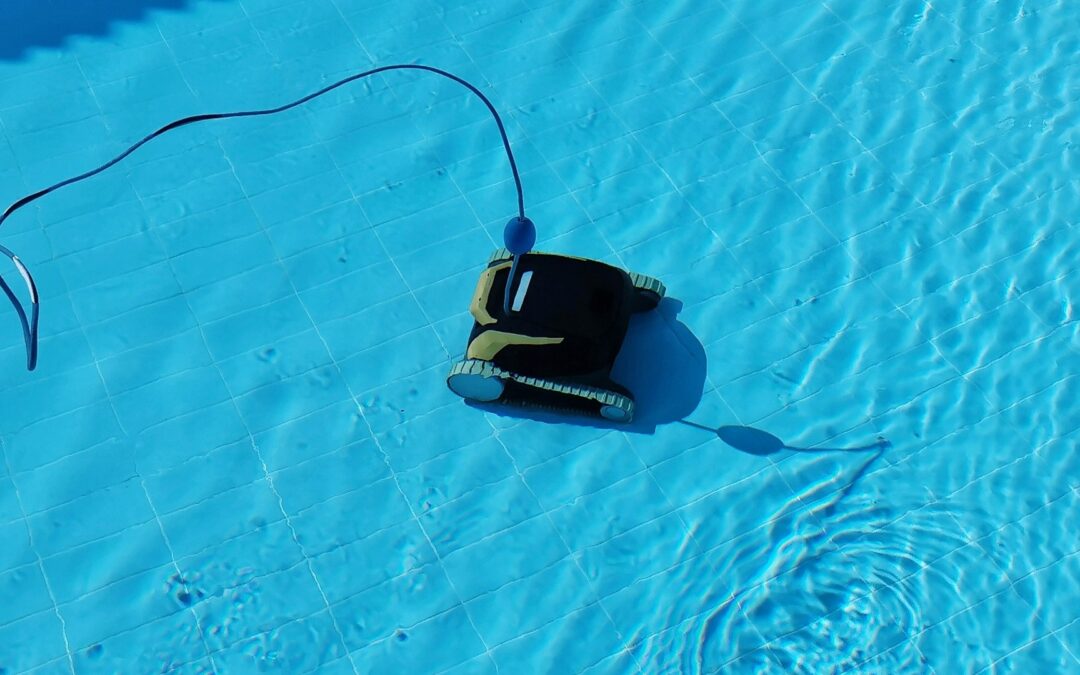
Robotic pool cleaners have improved significantly. Current models use smart navigation to map your pool’s shape and clean methodically rather than bouncing around randomly. They operate independently from your pool’s pump and filtration system, which means they don’t add strain to your equipment.
These are not technically part of a centralized automation system, as most operate as standalone units with their own apps for scheduling. But they reduce the manual labor of pool ownership considerably, and for Georgia pools that collect pollen, leaves, and debris almost year-round, that labor reduction matters.
Expect to spend $800 to $2,000 for a quality robotic cleaner. They won’t pay for themselves through energy savings the way a variable-speed pump will, but they give you back hours of time every week during the long Georgia swim season.
Freeze Protection: A Georgia-Specific Consideration
Georgia winters are generally mild, but cold snaps and occasional freezes do happen, and they can cause serious damage to pool plumbing, pumps, and heaters. Most smart control systems include built-in freeze protection that automatically activates your pump when temperatures drop to a set threshold. Moving water through the plumbing prevents pipes from freezing and cracking.
This feature alone has saved Georgia pool owners from thousands of dollars in repair bills. If you live in north Georgia, where winter lows occasionally dip into the teens and twenties, freeze protection is not optional. Even in metro Atlanta and points south, a hard freeze can catch you off guard. Having a system that responds automatically, without you needing to remember to go outside and flip a switch at 2 a.m., is invaluable.
What to Prioritize and What to Skip
Not every pool owner needs a full automation suite on day one. If you’re working with a budget, here’s a practical priority list for Georgia:
First, install a variable-speed pump. The energy savings are immediate and significant, and the payback period is the shortest of any pool upgrade.
Second, add a smart controller if you’re managing multiple pieces of equipment. The scheduling capabilities alone will reduce your energy and chemical costs, and freeze protection provides real insurance against winter damage.
Third, invest in a chemistry monitor or controller. Georgia’s climate makes water chemistry unusually demanding, and automation takes the guesswork and inconsistency out of the process.
Fourth, consider a robotic cleaner for the convenience factor, especially if your yard has heavy tree cover or you deal with persistent pollen and debris.
Fifth, upgrade to smart LED lighting if evening pool use is part of your routine.
A Note on Permits and Georgia Regulations
Georgia follows the International Swimming Pool and Spa Code, and all residential pools require a permit before construction can begin. Local building departments enforce these regulations, and requirements vary from county to county. If you’re adding automation to an existing pool, most equipment swaps and upgrades do not require a new permit, but any electrical work should be performed by a licensed electrician and may require an electrical permit depending on your county. Before starting any project, check with your local building department to confirm what’s required.
Georgia also requires pool fencing of at least four feet in height with self-closing, self-latching gates for residential pools. Automation doesn’t change these requirements, but smart pool door sensors and alarm integrations can add an additional layer of safety for families with young children.
The Bottom Line
Pool automation in 2026 is no longer a luxury reserved for high-end custom builds. The technology is mature, the products are proven, and the financial returns are real, especially in a state like Georgia where the swim season is long and the climate is demanding.
The best approach is to start with the upgrades that deliver measurable savings, like variable-speed pumps and smart scheduling, then layer in chemistry automation and convenience features as your budget allows. Focus on products from established manufacturers with strong app ecosystems and local dealer support. And work with a Georgia-based pool professional who understands the specific challenges of our climate, our soil conditions, and our seasonal patterns.
Your pool should be a place to relax, not a part-time job. The right automation setup makes that possible.