
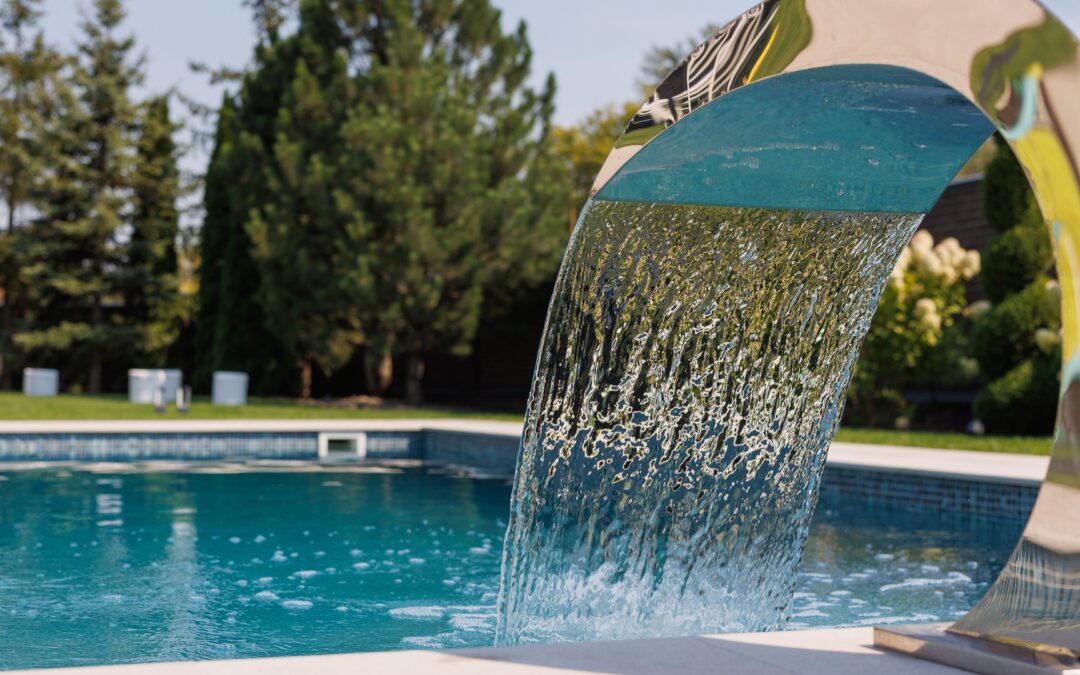
A pool on its own is great. But there is a reason so many Georgia homeowners start thinking about water features within a year or two of having their pool built. Moving water changes everything about a backyard. It adds sound, movement, and a sense of depth that still water just cannot offer. A well-chosen water feature turns a nice pool into something that genuinely feels like a retreat.
The good news is that there are more options than ever, and they span a wide range of budgets. The challenge is knowing which features make sense for your pool, your yard, and the specific conditions that come with living in Georgia. This guide breaks down the three most popular categories of pool water features and walks through what you need to consider before adding one to your setup.
Why Water Features Work So Well in Georgia
Before getting into the specifics, it is worth understanding why water features are such a natural fit for pools in this state.
Georgia’s pool season is long. In the southern half of the state, many homeowners are in their pools from late March through mid-October. Even in north Georgia and the metro Atlanta area, you can realistically get six to seven months of regular pool use. That long season means you get real value out of features that enhance the pool experience.
There is also a practical side. Georgia summers are hot and humid, with temperatures frequently sitting in the low to mid-90s from June through August. Moving water creates a cooling effect around your pool area. Waterfalls and fountains aerate the water as it moves, and that aeration can actually help lower the surface temperature of your pool by a few degrees. It is not dramatic, but on a 95-degree day in July, even a slight difference is noticeable.
The sound element matters too. If your home is near a busy road, close to neighbors, or in one of the many subdivisions around Atlanta, Savannah, or Augusta where lots are not especially large, the ambient sound of moving water does a surprisingly good job of masking background noise. It creates a sense of privacy that a quiet pool simply does not provide.
Waterfalls
Pool waterfalls are probably the most popular water feature in Georgia, and for good reason. They create a strong visual focal point and produce that natural, flowing water sound that most people associate with relaxation.
Types of Pool Waterfalls
There are a few different styles to choose from, and each gives your pool a different look and feel.
Natural rock waterfalls are built using stacked natural stone or manufactured rock formations. These are designed to look like something you might find at a creek or mountain stream, and they work especially well in Georgia backyards that lean into a natural, landscaped aesthetic. Builders in this state often use Tennessee fieldstone, Georgia granite, or moss rock to create formations that look like they belong here rather than something imported from a different climate. A natural rock waterfall can range from a subtle, two-foot cascade to a large, multi-tiered structure that becomes the centerpiece of your entire backyard.
Sheer descent waterfalls are the modern, clean-lined alternative. These produce a smooth, uniform sheet of water that falls from a raised wall or ledge into the pool below. They are popular in contemporary pool designs and pair well with the kind of geometric, clean pool shapes that have become increasingly common in newer Georgia subdivisions. Sheer descents can be set to different flow levels, from a thin, glass-like sheet to a fuller cascade with more sound and movement.
Grottos are an extension of the waterfall concept. A grotto is essentially a waterfall with a recessed space behind it, creating a small cave-like area that you can sit or swim in. They are a bigger investment and take up more space, but they are undeniably cool. Grottos work best with larger pools and are most common in custom builds.
What to Know Before Adding a Waterfall
Waterfalls require a pump to circulate the water, and that pump needs to be sized correctly for the height and width of the fall. A small sheer descent might run fine on your existing pool pump if it has enough capacity, but a larger natural rock waterfall will almost certainly need a dedicated pump. That means additional plumbing, electrical work, and a higher monthly energy cost.
In Georgia, any new electrical work around a pool needs to comply with state and local codes. Pool electrical systems must be bonded and grounded properly, and all electrical components need to be installed at the distances required by the National Electrical Code, which Georgia follows. This is not a DIY project. You will need a licensed electrician and likely a permit depending on your county.
Rock waterfalls also require a solid foundation. Georgia’s red clay soil expands and contracts with moisture changes, which can cause shifting over time. A reputable pool builder in this area will account for that when engineering the base of a rock feature, but it is worth asking about specifically if you are getting quotes. Settling or shifting can crack plumbing lines and destabilize the rock structure.
One more thing to think about: leaves. Georgia is heavily wooded in most areas, and if your pool is surrounded by hardwoods or pines, falling leaves and pine needles will collect in and around your waterfall. Rock waterfalls with lots of crevices require more cleaning than a smooth sheer descent. Factor that into your decision if low maintenance is a priority for you.
Fountains
Fountains cover a broad category of water features that shoot, spray, or arc water into the air. They range from simple, understated bubblers to dramatic deck jets and tall laminar streams. Where waterfalls add a natural, organic feel, fountains tend to bring energy and visual interest.
Types of Pool Fountains
Deck jets are installed in the pool deck and shoot arcs of water from the deck into the pool. They are one of the most popular fountain options in Georgia because they look great, they are relatively affordable, and they do not take up space inside the pool. Most deck jet installations use two to four jets, evenly spaced along one side of the pool, creating symmetrical arcs that catch the light. They also pair well with LED lighting for a striking effect at night.
Laminar jets produce smooth, clear streams of water that look almost like glass rods arcing through the air. These are the high-end version of the deck jet, and they can be fitted with fiber optic lighting inside the stream itself, which creates glowing arcs of colored water after dark. They are more expensive to install than standard deck jets but create a genuinely impressive visual.
Scuppers are rectangular or square openings set into a raised wall that pour water into the pool. They produce a clean, architectural look and are often used in rows of two, three, or more along a raised bond beam or spa spillway. Scuppers give you the sound and movement of a waterfall in a more modern, controlled package.
Spray fountains sit inside the pool and shoot water upward. These are a playful option and tend to be popular with families that have younger kids. They add movement and sound without requiring the structural work of a waterfall.
Placement and Design Considerations
Fountain placement matters more than people realize. In Georgia, afternoon winds are common, especially during the spring and early fall when weather fronts move through regularly. If your fountains spray or arc water, wind can push that water outside the pool, which wastes water, creates wet deck areas, and can be annoying for anyone sitting nearby. Positioning your fountains to account for the prevailing wind direction in your yard will save you a lot of frustration.
Also think about how fountains will interact with your pool’s circulation system. Fountains run on plumbing lines that connect back to your pool equipment, and they need adequate water flow and pressure to look right. Undersized plumbing or an overworked pump will produce weak, unimpressive streams instead of the clean arcs you see in photos. A good pool builder will plan the plumbing layout to support whatever features you want, but if you are adding fountains to an existing pool, your current equipment may need to be upgraded.
From a cost standpoint, deck jets are one of the most affordable water feature upgrades. A basic installation with two to four jets typically runs between $800 and $2,500 installed in most Georgia markets. Laminar jets cost more, usually in the $2,000 to $5,000 range for a set. Scuppers vary depending on the wall construction involved.
Bubblers
Bubblers are small fixtures installed on the floor of a shallow area, typically on a sun shelf, tanning ledge, or the top step of your pool entry. They push water up from below in a gentle, bubbling effect that is both visual and tactile.
Why Bubblers Are So Popular Right Now
If you have looked at any pool being built in Georgia in the last three to five years, you have almost certainly seen bubblers. They have become one of the most requested features in new pool construction across the state, and there are a few reasons why.
First, sun shelves and tanning ledges have become standard in a huge percentage of new Georgia pools. These shallow areas, usually six to eight inches deep, are designed for lounging in the water with a chair or just lying in the sun. Bubblers give those areas movement and sound, making them feel more alive.
Second, bubblers are relatively inexpensive to include during initial pool construction. Adding two to four bubblers to a sun shelf typically costs between $400 and $1,200 as part of a new build. Retrofitting them into an existing pool is more expensive because it involves cutting into the pool floor and running new plumbing, but it is still doable.
Third, they are low maintenance. Bubblers have no exposed parts above the water line, so there is nothing to clean, nothing exposed to UV, and nothing for leaves or debris to clog. In a state where pollen coats everything for two months straight and pine straw seems to appear out of nowhere, that simplicity is genuinely appealing.
Things to Consider
Bubblers work best in shallow water. If the water above them is too deep, the bubbling effect gets lost before it reaches the surface, and you just end up with slight turbulence instead of the visual effect you are paying for. Most manufacturers recommend bubblers for areas with six to ten inches of water depth.
They also add to your equipment load. Like other water features, bubblers run off your pool’s plumbing system and need adequate flow. If you are adding bubblers along with other features like a waterfall or deck jets, make sure your pump and plumbing can handle the total demand. A variable speed pump, which is already required by Georgia law for new pool installations as of recent energy codes, gives you the flexibility to adjust flow between different features.
Combining Features
Many Georgia pools use a combination of water features rather than just one. A common setup might include a sheer descent waterfall along the back wall, a pair of deck jets on one side, and two or three bubblers on the sun shelf. That combination gives you variety in both sound and visual movement, and it lets you run different features at different times depending on the mood or the occasion.
If you are going this route, the most important thing is planning the plumbing and pump capacity upfront. Each feature needs a dedicated line or a properly valved manifold so you can control them independently. Running everything off a single line with no way to adjust individual features will leave you frustrated.
Maintenance in Georgia’s Climate
Water features add some maintenance beyond what a standard pool requires. The mineral content in Georgia’s water supply varies by region, but calcium buildup is a common issue, especially on sheer descent features and scuppers where water flows over a smooth surface. Over time, white calcium deposits form along the edges and face of the feature, and they need to be cleaned periodically with a calcium remover to keep things looking sharp.
Algae is another consideration. Moving water is actually more resistant to algae than still water because the circulation and aeration discourage growth. But the areas around water features, particularly natural rock formations, can develop algae in the warm, humid months if your water chemistry is not dialed in. Keeping your chlorine and pH levels balanced is the best prevention, and a weekly brush of any rock surfaces during the summer goes a long way.
Making the Decision
The best approach is to start by figuring out what you want the feature to do for your pool. If you want a focal point with drama and sound, a waterfall is your best bet. Or if you want subtle movement and modern style, deck jets or scuppers fit the bill. But, if you want to enhance a sun shelf where you spend most of your time, bubblers are the clear choice.
Talk to a few local pool builders and get their input on what works well in your specific yard. Every property is different. Soil conditions, lot size, existing pool equipment, and sun exposure all play a role in what will work best. A builder who works primarily in Georgia will understand the local variables and help you avoid the common mistakes that come from not accounting for them.
Whatever you choose, adding a water feature is one of the most rewarding upgrades you can make to a Georgia pool. It adds beauty, sound, and a sense of life to your backyard that flat, still water just cannot match. And in a state where you can enjoy your pool for the better part of the year, that upgrade pays off every single day you use it.