
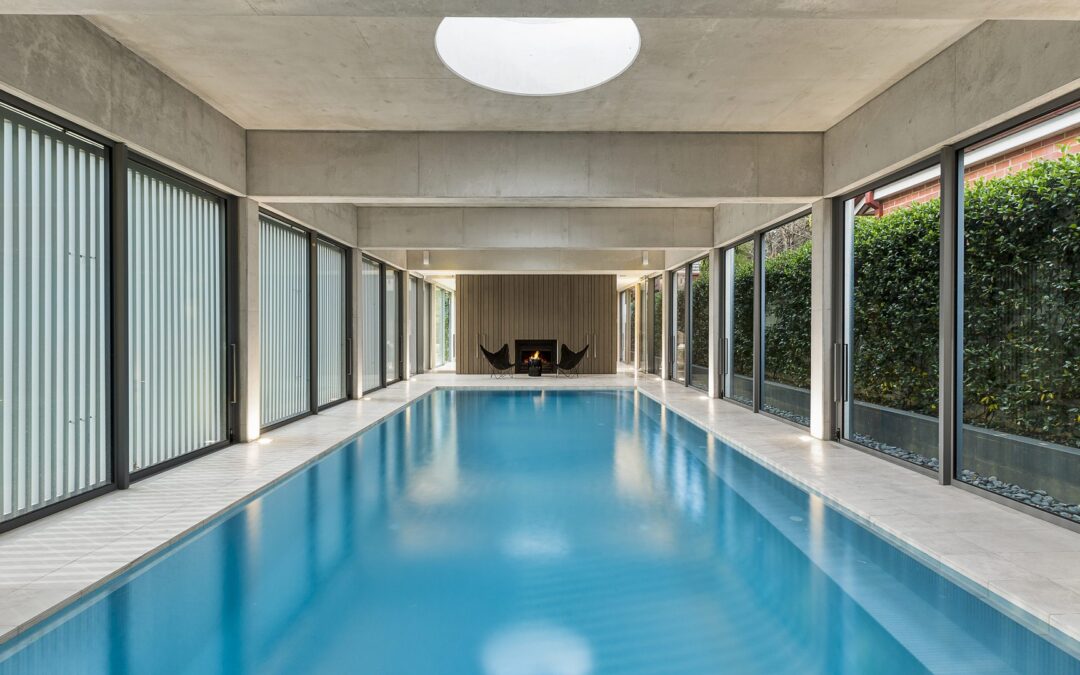
When you’re considering adding an indoor pool to your Atlanta home, or perhaps looking at properties that already feature one, you’re faced with a decision that goes far beyond simple luxury. An indoor pool represents a significant investment in your lifestyle, property value, and daily routine. In the unique climate and cultural landscape of Atlanta, this decision takes on particular dimensions that deserve careful consideration.
Understanding Atlanta’s Climate and How It Affects Pool Ownership
Atlanta’s subtropical climate creates an interesting context for pool ownership that differs markedly from other parts of the country. While our summers are undeniably hot and humid, making any pool an attractive proposition, our winters can be surprisingly variable. We experience temperatures that can dip below freezing several times each winter, yet we also enjoy those glorious February days when the mercury climbs into the seventies. This climatic variability makes indoor pools particularly appealing to Atlanta homeowners who want year-round swimming without the maintenance headaches that come with winterizing an outdoor pool.
The humidity levels in Atlanta also play a crucial role in the indoor pool conversation. Our average relative humidity hovers around seventy percent for much of the year, which means that proper ventilation and dehumidification systems aren’t just recommended for indoor pools here—they’re absolutely essential. Without adequate climate control, an indoor pool in Atlanta can quickly turn your home into a breeding ground for mold and mildew, problems that are already challenging enough in our humid environment without adding a large body of water inside your home.
The Advantages of Indoor Pool Ownership in Atlanta
Year-round enjoyment stands as perhaps the most compelling argument for an indoor pool in Atlanta. While outdoor pool owners typically get about five to six months of comfortable swimming weather, indoor pool owners can take a dip on Christmas morning or during those unexpected March cold snaps that send everyone else indoors. This extended usability particularly benefits families with competitive swimmers who need consistent training facilities, adults using aquatic exercise for physical therapy or fitness, and anyone who simply loves swimming as their primary form of exercise.
Privacy represents another significant advantage that resonates strongly with Atlanta homeowners. In many of Atlanta’s established neighborhoods, from Buckhead to Virginia-Highland, homes sit relatively close together. An indoor pool offers complete privacy from neighbors, allowing you to swim at any hour without concern for noise ordinances or prying eyes. This privacy factor becomes even more valuable in our increasingly connected world, where many professionals work from home and might want to squeeze in a quick swim between video calls without having to worry about their appearance or disturbing anyone.
The health benefits of having immediate access to a pool cannot be overstated. Swimming provides one of the most complete cardiovascular workouts available, and it’s particularly valuable for Atlanta residents dealing with our notorious traffic and sedentary office jobs. The low-impact nature of aquatic exercise makes it ideal for aging baby boomers, a demographic that comprises a significant portion of Atlanta’s affluent neighborhoods. For those recovering from injuries or managing chronic conditions like arthritis, an indoor pool heated to therapeutic temperatures can become an essential part of daily health management.
More Pros to an Indoor Pool
From a property value perspective, an indoor pool can set your home apart in Atlanta’s competitive real estate market. While the return on investment varies significantly based on factors like neighborhood, overall home value, and pool quality, a well-maintained indoor pool can be a powerful differentiator. This is particularly true in luxury markets like Tuxedo Park, Chastain Park, and Country Club of the South, where buyers expect exceptional amenities. Real estate professionals in Atlanta note that while an indoor pool might not add dollar-for-dollar value to your home, it can significantly reduce time on market for the right buyer.
The controlled environment of an indoor pool also means consistent water quality and temperature. You won’t deal with leaves, pollen, or the yellow dust that coats everything in Atlanta during spring. The notorious “pollenpocalypse” that turns outdoor pools green won’t affect your indoor oasis. You can maintain precise temperature control year-round, which is particularly valuable for therapeutic uses or for families with young children who are more sensitive to cold water.
The Challenges and Drawbacks to Consider
The financial implications of an indoor pool extend far beyond the initial installation. In Atlanta, constructing an indoor pool addition typically starts around $150,000 for a basic setup and can easily exceed $500,000 for luxury installations with full amenities. This cost includes not just the pool itself but the necessary structure, specialized HVAC systems, dehumidification equipment, and the inevitable home modifications required to support such an addition. The ongoing operational costs are equally significant. Heating an indoor pool year-round in Atlanta, maintaining proper humidity control, and running filtration systems can add $500 to $1,000 monthly to your utility bills, depending on pool size and usage patterns.
Maintenance becomes a daily consideration with an indoor pool. While you avoid some outdoor pool challenges, you face others that are unique to indoor installations. The high humidity environment requires constant vigilance against mold and mildew, not just in the pool area but throughout adjacent spaces in your home. The dehumidification systems that prevent these problems require regular maintenance and eventual replacement. In Atlanta’s climate, these systems work overtime, potentially shortening their lifespan compared to installations in drier climates.
The space requirements for an indoor pool often surprise homeowners. Beyond the pool itself, you need adequate deck space, storage for chemicals and equipment, changing areas, and proper clearance for the enclosure. In Atlanta’s older neighborhoods, where lot sizes might be generous but homes weren’t designed with indoor pools in mind, this can mean sacrificing other living spaces or building significant additions. The structural requirements are substantial—the weight of the water, the need for proper drainage, and the specialized construction to handle humidity all require experienced contractors familiar with these challenges.
More Drawbacks
Insurance and liability considerations take on new dimensions with an indoor pool. Your homeowner’s insurance premiums will increase, sometimes dramatically. You’ll need to ensure proper safety features are installed and maintained, including appropriate barriers, alarms, and non-slip surfaces. In Georgia, while there aren’t specific state laws governing private indoor pools, you’ll need to comply with local building codes and potentially HOA regulations. Many Atlanta area HOAs have specific requirements or restrictions regarding pool additions that must be carefully navigated.
The potential for water damage represents a unique risk with indoor pools. A small leak in an outdoor pool might go unnoticed for weeks with minimal consequence. The same leak in an indoor pool can cause catastrophic damage to your home’s structure, flooring, and foundation. The humid environment can accelerate deterioration of building materials if not properly managed. Even with the best ventilation systems, the chlorine and other pool chemicals can be harsh on interior finishes, requiring more frequent repainting and refinishing of adjacent spaces.
Making the Decision: Key Factors for Atlanta Homeowners
Your lifestyle and actual usage patterns should drive this decision more than any other factor. Be honest about how often you’ll use the pool. If you’re a dedicated swimmer who currently drives to the gym five days a week for lap swimming, an indoor pool might transform your daily routine and save you time battling Atlanta traffic. However, if your current outdoor pool sits unused for weeks at a time, an indoor pool likely won’t change those habits.
Consider your long-term plans for the home. In Atlanta’s dynamic real estate market, neighborhood trajectories can shift. If you’re in an area like the BeltLine corridor where property values are rapidly appreciating, a major investment like an indoor pool might make sense. However, if you’re planning to relocate within five years, you’re unlikely to recoup the investment. Indoor pools typically appeal to a narrow segment of buyers, potentially limiting your resale market.
The architectural integration of an indoor pool matters enormously in Atlanta’s diverse housing stock. A poorly integrated pool addition can actually decrease your home’s value by disrupting its architectural integrity. This is particularly important in historic neighborhoods like Druid Hills or Grant Park, where maintaining architectural character is paramount. Working with architects and designers who understand both pool construction and Atlanta’s architectural traditions is essential.
Your family’s composition and trajectory should factor prominently in your decision. Young children can benefit enormously from easy pool access for both recreation and swimming lessons. However, they also require constant supervision around water, and an indoor pool means that vigilance must be maintained year-round. As children age into teenagers, an indoor pool can become a powerful incentive to host gatherings at home rather than elsewhere—a consideration many parents value.
The Environmental and Energy Considerations
In environmentally conscious Atlanta, the energy consumption of an indoor pool deserves careful consideration. However, modern technology offers numerous ways to minimize environmental impact. Solar heating systems work well in Georgia’s sunny climate, even for indoor pools. Variable-speed pumps, LED lighting, and smart control systems can significantly reduce energy consumption. Some Atlanta homeowners are installing sophisticated heat recovery systems that use the waste heat from dehumidification to help heat the pool water, improving overall efficiency.
Water conservation is another important consideration in North Georgia, where periodic droughts and water restrictions are part of life. While indoor pools lose less water to evaporation than outdoor pools, they still require regular refilling and backwashing. Installing water-saving features like cartridge filters instead of sand filters, and maintaining proper chemical balance to minimize the need for draining, becomes part of responsible pool ownership in our region.
Alternative Options Worth Considering
Before committing to an indoor pool, Atlanta homeowners should consider alternatives that might meet their needs with less complexity and cost. Endless pools or swim spas offer year-round swimming in a much smaller footprint and can often be installed in existing spaces like basements or garages. These options provide excellent exercise opportunities with lower operational costs and simpler maintenance.
Retractable enclosures represent another alternative that’s gaining popularity in Atlanta. These systems allow you to enjoy an outdoor pool during pleasant weather while providing protection during winter or pollen season. While expensive, they’re typically less costly than full indoor pool construction and offer more flexibility.
For those primarily interested in the therapeutic benefits, hot tubs or specialized therapy pools might meet your needs at a fraction of the cost and complexity of a full indoor pool. These can often be installed in existing sunrooms or covered patios, providing year-round access without major construction.
Conclusion: Making Your Choice
The decision to install an indoor pool in your Atlanta home ultimately comes down to a careful weighing of your specific circumstances, desires, and resources. For the right household—one with dedicated swimmers, adequate budget for both installation and maintenance, appropriate space, and long-term residence plans—an indoor pool can provide extraordinary value and enjoyment. The ability to swim year-round in complete privacy, combined with the health benefits and potential property value enhancement, can make the investment worthwhile.
However, the significant financial commitment, ongoing maintenance requirements, and potential complications cannot be overlooked. The humid Atlanta climate adds particular challenges that require sophisticated mechanical systems and vigilant maintenance. The impact on your home’s architecture, your insurance costs, and your daily routine all deserve careful consideration.
As you make this decision, consult with local pool contractors who understand Atlanta’s specific challenges, speak with current indoor pool owners in similar neighborhoods, and carefully evaluate your family’s actual likelihood of regular use. Consider starting with a thorough cost analysis that includes not just installation but ten years of operational expenses. Visit homes with indoor pools during open houses to get a sense of how they integrate with living spaces. Most importantly, be realistic about your willingness to commit to the ongoing maintenance and monitoring that an indoor pool requires.
An indoor pool in Atlanta can be a wonderful addition to the right home, providing years of enjoyment, exercise, and family memories. But it’s not a decision to be made lightly or based solely on the appeal of a luxury amenity. With careful planning, realistic expectations, and proper execution, an indoor pool can enhance your Atlanta home and lifestyle in meaningful ways. Without these elements, it can become an expensive burden that complicates rather than enriches your life.
Frequently Asked Questions
How much does it typically cost to heat an indoor pool year-round in Atlanta?
Heating costs for an indoor pool in Atlanta typically range from $300 to $600 per month, depending on several factors including pool size, desired temperature, and the efficiency of your heating system. Most indoor pool owners in Atlanta keep their pools between 78-82 degrees Fahrenheit year-round. The cost can be significantly reduced by using a pool cover when the pool isn’t in use, installing a high-efficiency heat pump rather than a gas heater, and incorporating solar heating panels which work well with Georgia’s abundant sunshine. Additionally, the dehumidification system required for indoor pools generates waste heat that can be recaptured and used to help warm the pool water, improving overall energy efficiency. It’s worth noting that these costs are separate from the dehumidification and ventilation expenses, which can add another $200-$400 monthly to your operational costs.
What are the specific building permit and code requirements for indoor pools in Atlanta?
In Atlanta and surrounding metro counties, indoor pool installations require multiple permits and must meet various code requirements. You’ll need a building permit for the structure, electrical permits for pumps and lighting, plumbing permits for water supply and drainage, and mechanical permits for HVAC and dehumidification systems. The City of Atlanta requires that indoor pools meet specific ventilation requirements to maintain air quality and prevent moisture damage, typically requiring a minimum of 4-6 air changes per hour. Safety requirements include proper barrier protection, emergency shutoff switches located at least 5 feet from the pool edge, and GFCI protection for all electrical components. Fulton, DeKalb, Gwinnett, and Cobb counties each have slightly different requirements, so it’s essential to work with contractors familiar with your specific jurisdiction. Most permits require detailed architectural and engineering plans, and inspections occur at multiple stages throughout construction. The permitting process typically takes 6-12 weeks in Atlanta, though this can vary significantly based on the complexity of your project and current municipal workload.
How does an indoor pool affect home resale value in different Atlanta neighborhoods?
The impact of an indoor pool on resale value varies dramatically across Atlanta’s diverse neighborhoods and depends heavily on the price point of your home and the expectations of buyers in your area. In luxury neighborhoods like Buckhead, Chastain Park, and Country Club of the South, where homes routinely sell for over $2 million, a well-designed indoor pool can be viewed as an appropriate amenity that enhances value, though rarely dollar-for-dollar. In middle-market neighborhoods, an indoor pool might actually limit your buyer pool and potentially decrease value, as many buyers see it as an expensive maintenance burden rather than an asset. Real estate professionals in Atlanta generally estimate that an indoor pool returns 50-70% of its investment in high-end markets, but potentially less in middle markets. The key factors that influence value include the quality of the installation, how well it integrates with the home’s architecture, the condition of all mechanical systems, and whether the pool space can potentially be converted to other uses. In growing areas like East Atlanta or parts of Decatur, where younger professionals are buying, an indoor pool might be seen as an unnecessary complication, while in established family neighborhoods like Morningside or Virginia-Highland, it could appeal to affluent families looking for unique amenities.