
The way you enter and exit your pool might seem like a small detail compared to choosing the pool’s shape or size, but it’s actually one of the most important decisions you’ll make. Every single time someone uses your pool, they’ll interact with your entry choice. Whether it’s your kids jumping in for a quick swim before school, your elderly parents visiting for a weekend barbecue, or you trying to relax after a long day at work, the entry system you choose directly impacts safety, comfort, and enjoyment.
Here in Atlanta, we have some unique considerations that affect this decision. Our extended swimming season means your pool entry gets more use than in many parts of the country. Our demographic diversity – from young families in Alpharetta to retirees in Peachtree City – means thinking carefully about who will use your pool. And our varying lot sizes and topographies, from sprawling Buckhead estates to cozy Decatur backyards, all play into what makes sense for your specific situation.
Understanding Your Pool Entry Options
Let’s start with the basics. When we talk about pool entries, we’re essentially looking at three main categories, each with its own variations and possibilities. Traditional steps are what most people picture – a set of stairs built into the pool structure. Ladders are the metal or plastic additions that mount to your pool deck and wall. Beach entries, also called zero entries or walk-in entries, create a gradual slope from deck level into the water, mimicking a natural beach.
Each option has evolved significantly over the years. Today’s choices go far beyond the simple functionality of getting in and out of the water. Modern pool entries can be architectural features, therapeutic spaces, and social gathering spots. Understanding what’s possible helps you make a choice that enhances both the beauty and functionality of your pool.
Traditional Steps: The Versatile Standard
Traditional steps remain the most popular entry choice for Atlanta pools, and there’s good reason for that popularity. Built directly into your pool’s structure, steps provide a permanent, stable entry point that can be designed to complement your pool’s overall aesthetic. In gunite pools, which dominate the Atlanta market, steps can be crafted in virtually any configuration.
The standard approach involves corner steps, typically taking up a 3×3 foot area in one corner of the pool. These work well for rectangular pools and provide a predictable, safe entry point. The steps are usually about 12 inches deep and 18 inches wide, creating a comfortable stride for most adults. But don’t feel locked into this configuration – custom designs can accommodate your specific needs and space.
Wedding cake steps, which get their name from their semicircular, tiered design, have become increasingly popular in freeform pools. These create a softer, more organic look while providing ample space for entering the pool or just sitting and relaxing. In Atlanta’s social culture, where pool parties are common from May through September, these wider steps become impromptu seating areas where guests naturally congregate.
One advantage of built-in steps that’s particularly relevant to Georgia pool owners is their permanence. Unlike ladders that can be damaged by winter weather or knocked loose by enthusiastic swimmers, properly constructed steps become an integral part of your pool structure. They’re always there, always ready, and require no seasonal installation or removal.
The depth consideration matters more than many homeowners initially realize. Steps that extend too deep into the pool reduce your swimming area, while steps that don’t extend deep enough can create an awkward transition into swimming depth. Most Atlanta pool builders recommend a final step depth of 18-24 inches, allowing swimmers to push off comfortably while still being able to stand if needed.
Ladders: The Space-Saving Solution
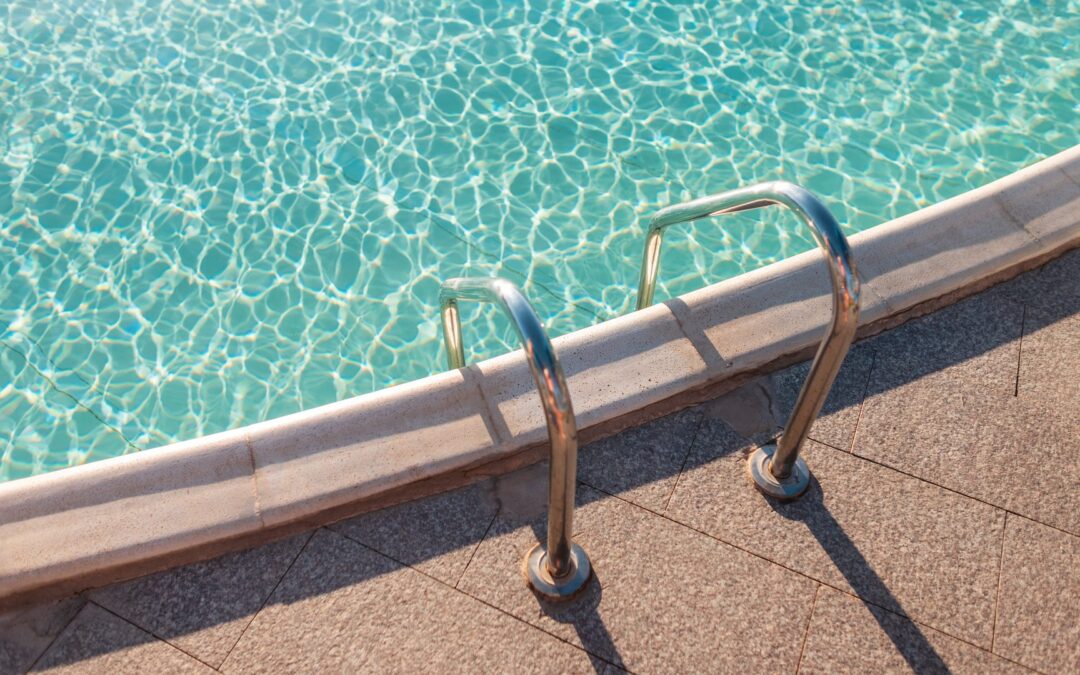
Pool ladders often get dismissed as the “cheap” option, but modern ladder systems deserve more credit. For Atlanta homeowners dealing with smaller lots or specific design constraints, ladders can be the smart choice that maximizes swimming space while still providing safe entry and exit.
The evolution of pool ladder design has addressed many traditional concerns. Today’s options include wide-step ladders that accommodate larger feet comfortably, swing-up models that can be locked in an upright position for child safety, and even custom powder-coated colors that match your pool’s aesthetic. The key is choosing a ladder system designed for long-term use rather than settling for basic models.
In vinyl liner pools, which are common in North Georgia where rocky soil makes excavation challenging, ladders are often the primary entry method. The ladder mounts distribute weight across the deck and pool wall, avoiding the stress points that built-in steps can create in liner installations. This isn’t a compromise – it’s smart engineering that prevents future problems.
For lap pools or exercise pools, ladders make particular sense. They preserve the full length of the pool for swimming while providing necessary access. Some Atlanta homeowners with narrow lots have found that choosing ladders over steps gives them the extra few feet needed to achieve a proper lap-swimming length.
The maintenance aspect of ladders deserves consideration too. Quality stainless steel ladders require minimal upkeep beyond occasional cleaning. Unlike steps that can develop cracks or need resurfacing, a well-chosen ladder can last the lifetime of your pool with simple care. In our humid climate, choosing marine-grade stainless steel prevents the corrosion issues that plagued older ladder designs.
Beach Entries: The Ultimate in Accessibility and Luxury
Beach entries represent the premium option in pool access, and they’re becoming increasingly popular in upscale Atlanta neighborhoods. Also known as zero entries, these designs create a gradual slope from your deck into the pool, eliminating the need to step or climb down. The result is an entry that’s accessible to everyone, from toddlers to grandparents with mobility concerns.
The typical beach entry slopes at about one foot of depth for every three feet of length, though this can be adjusted based on your specific needs and available space. This means you’ll need to dedicate significant square footage to the entry – usually at least 8-10 feet of pool length. For many Atlanta properties, this space investment is worthwhile for the benefits it provides.
Beyond accessibility, beach entries create unique opportunities for pool enjoyment. The shallow area becomes a play zone for young children, who can splash and play with much less risk than in deeper water. Adults discover that this area is perfect for setting up chairs partially in the water, creating a cooling retreat on hot Georgia afternoons. It’s not uncommon to see beach entry areas become the most-used part of the pool.
The construction of beach entries requires experienced craftsmanship. The slope must be consistent and slip-resistant, particularly important given our frequent summer rain showers. Many Atlanta pool builders incorporate special texturing or even heating elements in beach entries to enhance safety and extend usability. The transition from deck to water needs careful attention to prevent tripping hazards while maintaining an attractive appearance.
Cost considerations for beach entries go beyond initial construction. The larger surface area in shallow water can affect heating costs and chemical balance. Algae prevention becomes more critical since shallow, warm water provides ideal growing conditions. However, many homeowners find these ongoing considerations worthwhile for the enhanced accessibility and unique aesthetic beach entries provide.
Combination Approaches: Getting the Best of Multiple Worlds
Smart pool design often incorporates multiple entry types, and this approach works particularly well for Atlanta’s diverse households. A pool with both traditional steps and a ladder provides options for different users and situations. Adding a beach entry to a pool that also has steps creates distinct zones for different activities.
Consider a typical scenario: a family with young children and active teenagers, who also regularly host extended family including elderly relatives. A beach entry provides safe access for the grandparents and a play area for young children. Traditional steps in the deep end give teenagers a spot to hang out, while a ladder near the diving area provides quick exit after jumps. This multi-entry approach ensures everyone can enjoy the pool comfortably.
The key to successful combination designs is thoughtful placement. Entries should enhance traffic flow rather than create congestion. In Atlanta’s outdoor living culture, where pools often connect to outdoor kitchens and entertainment areas, entry placement can direct traffic patterns and create natural gathering zones.
Special Considerations for Atlanta’s Climate and Conditions
Our Georgia climate impacts pool entry decisions in ways that might not be immediately obvious. The intense summer sun heats surfaces quickly, making material choices crucial. Light-colored plaster on steps stays cooler than dark finishes. Beach entries benefit from textured surfaces that remain slip-resistant when wet from our afternoon thunderstorms.
Winter considerations matter too, even though many Atlanta pools remain open year-round. Steps and beach entries must be designed to handle occasional freezing without damage. Proper drainage prevents standing water that could freeze and create hazards. Ladder cups should be designed to shed water rather than collect it.
Our red clay soil creates unique challenges during construction. Beach entries, in particular, require careful engineering to prevent settling that could alter the carefully crafted slope. Experienced local builders understand how to properly compact and prepare the ground to prevent future problems.
The pollen season – that yellow coating that blankets everything in spring – affects different entry types differently. Beach entries can be more challenging to clean since pollen settles in the shallow water. Steps with proper water circulation clean more easily. Ladders have the advantage of presenting minimal surface area for pollen accumulation.
Safety Features and Code Compliance
Safety should be the primary consideration in any pool entry decision. Georgia follows the International Swimming Pool and Spa Code, but local jurisdictions often have additional requirements. All entries must include slip-resistant surfaces and proper handrails where required.
For steps, handrails become mandatory when you have more than three risers. The rails must extend within 12 inches of the top of the pool wall and return to the pool wall or floor. Many Atlanta homeowners choose to include handrails even when not required, particularly if elderly relatives or anyone with mobility challenges will use the pool.
Beach entries present unique safety considerations. The slope must be clearly visible to prevent unexpected drops. Many builders incorporate visual cues like color changes or textural differences to indicate depth transitions. Proper lighting becomes crucial since the gradual slope can be difficult to perceive in low light conditions.
Ladder safety has improved dramatically with modern designs. Look for ladders with wide, non-slip treads and sturdy handrails that extend well above deck level. Weight ratings matter – ensure your chosen ladder can safely support the heaviest potential user plus a safety margin.
Design Integration and Aesthetic Considerations
Your pool entry shouldn’t be an afterthought – it should integrate seamlessly with your overall pool and landscape design. In Atlanta’s competitive real estate market, a well-designed pool can significantly impact property value, and the entry plays a crucial role in that first impression.
Steps offer the most design flexibility. They can incorporate the same tile or finish as your pool’s waterline, creating visual continuity. Some homeowners choose contrasting colors to make steps more visible for safety. Built-in seating areas, sun shelves, and spa spillovers can all integrate with step designs to create cohesive outdoor living spaces.
Beach entries provide opportunities for creative expression. Some Atlanta homeowners incorporate river rock or pebble finishes to enhance the natural beach feel. Others use the beach entry area to transition between pool and landscape, blurring the lines between built and natural environments. Water features like bubblers or fountains in beach entry areas create appealing visual and auditory elements.
Even ladders can contribute to your pool’s aesthetic. Powder-coated options in bronze or black can complement modern farmhouse styles popular in Atlanta suburbs. Sleek stainless designs work well with contemporary architecture. The key is choosing ladders as design elements rather than purely functional additions.
Maintenance Requirements for Different Entry Types
Long-term maintenance varies significantly between entry types, and understanding these differences helps you make an informed decision. In Atlanta’s climate, with its combination of heat, humidity, and seasonal changes, maintenance considerations become even more important.
Built-in steps require the same maintenance as your pool surface – regular brushing, chemical balance monitoring, and periodic resurfacing. The corners where steps meet pool walls need extra attention to prevent algae growth. Depending on your pool’s finish, steps might need resurfacing every 10-15 years, which can be done as part of overall pool renovation.
Beach entries demand more frequent attention due to their shallow water. Daily brushing becomes more critical to prevent algae and staining. The larger surface area affects chemical consumption and balance. Some Atlanta pool owners install dedicated circulation systems for beach entry areas to ensure proper water movement and filtration.
Ladders offer the simplest maintenance profile. Regular cleaning with appropriate stainless steel cleaners prevents water spots and maintains appearance. Annual inspection of mounting points ensures continued safety. Replacement, when eventually needed, is straightforward and much less expensive than resurfacing steps or beach entries.
Making the Right Choice for Your Family
Ultimately, choosing between steps, ladders, and beach entries comes down to understanding your specific needs, both current and future. Start by honestly assessing who will use your pool and how. Young families might prioritize beach entries for safety and play value. Fitness-focused individuals might choose ladders to maximize lap swimming space. Multi-generational households often benefit from combination approaches.
Consider your long-term plans. If you’re in your forever home, investing in a beach entry that will serve you well into retirement makes sense. If you might move in five years, traditional steps offer broad appeal to future buyers. Think about how your needs might change as children grow or as you age.
Budget obviously plays a role, but don’t let initial cost be the only factor. A beach entry might cost more upfront but could save money on separate kiddie pools or reduce liability concerns. Quality ladders might seem expensive compared to basic models but last much longer and provide better safety. Steps are typically included in pool construction costs but adding special features increases the price.
Consult with experienced Atlanta pool builders who understand our local conditions and can show you completed projects. Visit other pools if possible to try different entry types. Many homeowners find that experiencing different options firsthand clarifies their preferences in ways that pictures and descriptions cannot.
The Bottom Line on Pool Entries
Your pool entry choice impacts every aspect of pool ownership – from daily enjoyment to long-term maintenance, from safety to property value. In Atlanta’s climate and culture, where pools serve as extended living spaces for much of the year, this decision deserves careful consideration.
Whether you choose the versatility of traditional steps, the space efficiency of ladders, the accessibility of beach entries, or a combination approach, ensure your choice aligns with your lifestyle, budget, and long-term plans. Work with a pool installation professional who understand not just pool construction but how Atlanta families actually use their pools.
Remember that the best pool entry is the one that makes everyone in your household excited to use the pool while keeping them safe. When you get this decision right, you’ll appreciate it every single day of swim season – which, here in Atlanta, thankfully lasts most of the year.