
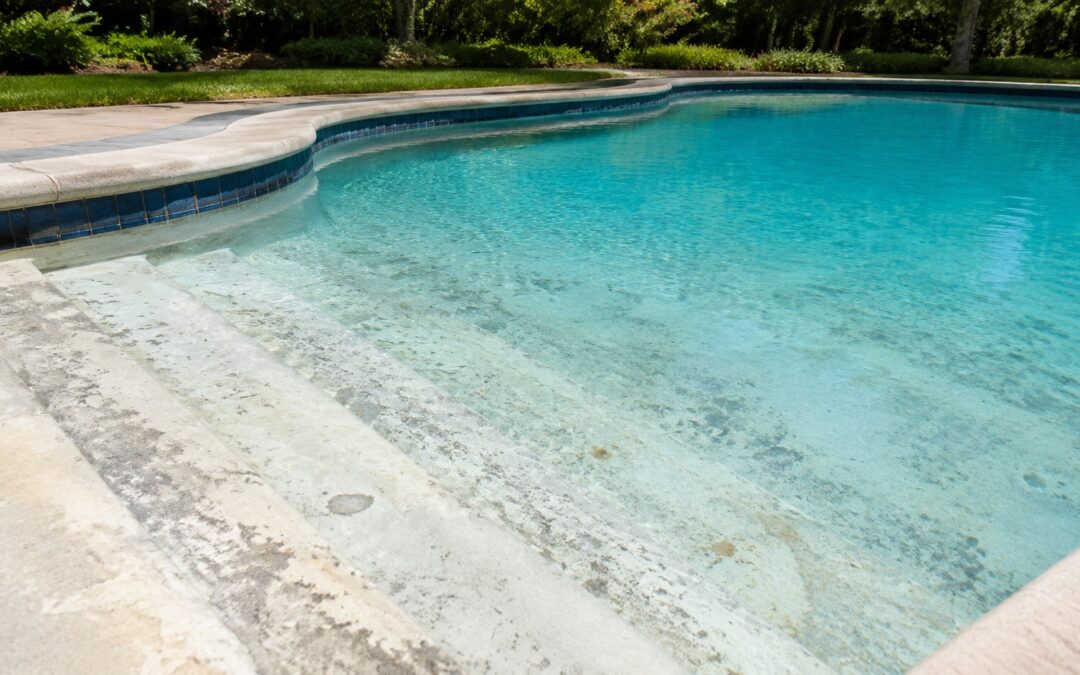
A backyard pool in Georgia earns its keep. Swim season here runs longer than it does in most of the country. A well maintained pool gets used from late spring through early fall, and sometimes longer with a heater. That long season comes at a price. The interior finish of your pool absorbs months of direct sun, heavy chemical use, and high bather loads. Add some of the most persistent pollen in the nation on top of that. Over time, even a well built surface wears out.
Resurfacing is the process of removing the old interior finish and applying a new one over the pool shell. It is one of the largest maintenance investments a pool owner will make. Most people put it off as long as they can. The trouble is that waiting too long tends to cost more, not less. A deteriorating surface can hide leaks, damage equipment, and make water chemistry a constant struggle.
This guide walks through seven signs that your pool is due for a new finish. It also explains why Georgia conditions accelerate surface wear and what the resurfacing process involves. The information below applies whether your pool is in metro Atlanta, the north Georgia mountains, or the coastal plain near Savannah.
Why Georgia Pools Wear Differently
Before getting into the specific warning signs, it helps to understand what your pool is up against. Georgia’s climate and geography put several distinct stresses on a pool finish.
Heat and ultraviolet exposure. Summer high temperatures across most of the state regularly reach the low 90s Fahrenheit. The sun is intense for much of the year. Warm water speeds up chemical reactions, including the ones that slowly break down cement based finishes. Ultraviolet light also burns off chlorine quickly, which pushes owners to add more sanitizer and more stabilizer. Heavy chemical use is hard on plaster.
Humidity and rainfall. Georgia is a wet state. Heavy summer thunderstorms and occasional tropical systems dump large volumes of rain into pools. That dilutes chemicals and throws the water out of balance. Runoff carries dirt, organic debris, and fertilizer into the water. Frequent rebalancing means frequent chemical swings, and those swings are a major cause of surface etching.
Pollen. The Atlanta area is known nationally for its spring pollen counts. Pine, oak, and other tree pollen coat everything in a yellow film for weeks each year. Pollen that settles in a pool feeds algae and clogs filtration. It also contributes to staining when it collects on rough or porous surfaces.
Soil conditions. Much of the Piedmont region, including metro Atlanta, sits on red clay. Clay expands when wet and shrinks when dry. Georgia cycles between saturated and drought conditions over the course of a year. That movement puts stress on the pool shell and can contribute to cracking. Closer to the coast, sandy soils and a high water table create a different set of concerns. Hydrostatic pressure can lift or stress a shell if a pool is drained improperly.
Freeze and thaw. North Georgia sees regular winter nights below freezing. Water that seeps into small surface cracks expands when it freezes, which widens those cracks over time. South Georgia pools see far less of this, but it remains a factor in the northern half of the state.
Soft water. Much of the drinking water in north Georgia comes from surface reservoirs and is naturally soft. That means it carries relatively little dissolved calcium. Soft water is aggressive toward plaster and other cement based finishes. Water that is low in calcium will pull calcium out of the pool surface to reach equilibrium, which slowly dissolves the finish. Pool owners who fill or top off with municipal water need to add calcium chloride to keep calcium hardness in the recommended range. Many do not realize this.
Taken together, these factors mean a finish that might last a decade or more in a mild, dry climate can wear out sooner here. With that context in mind, here are the seven signs to watch for.
Sign 1: The Surface Feels Rough or Etched
Run your hand along the pool wall below the waterline. A healthy plaster or aggregate finish should feel relatively smooth. If it feels like sandpaper, or if you notice small pits and craters across the surface, you are looking at etching.
Etching happens when the water becomes aggressive, usually because of low pH, low alkalinity, or low calcium hardness. Aggressive water dissolves the cement paste that binds the finish together, leaving behind exposed sand and aggregate. Given the soft fill water in much of the state and the constant dilution from summer rain, Georgia pools are especially prone to this.
Minor roughness in a young finish can sometimes be addressed with careful chemistry correction. Once the etching is widespread and deep, the damage is permanent. Rough surfaces scrape skin, snag swimsuits, and provide a foothold for algae. They also hold onto stains far more readily than smooth surfaces do. Maybe your family complains about scraped toes, or you find yourself brushing algae from the same spots week after week. Either way, the finish is likely at the end of its useful life.
Sign 2: Stains That Will Not Come Out
Every pool picks up stains eventually. The question is whether they respond to treatment. Fresh stains from leaves, pollen, or metals can usually be removed with brushing, a stain treatment, or an acid wash. Stains that survive those efforts have penetrated the finish itself.
Georgia pools face several common stain sources. Organic staining from leaves, pine needles, and pollen tends to show up as brown or greenish blotches. These often collect at the bottom of the deep end where debris settles. Metal staining is another frequent problem, particularly for homeowners on well water, which can carry dissolved iron and manganese. Iron leaves rust colored marks, while manganese and copper produce purple, black, or teal discoloration. Copper staining can also come from heater components or from copper based algaecides.
A single acid wash can brighten a tired finish, but each wash removes a thin layer of material. Plaster that has already been acid washed once or twice has little left to give. When stains cover large areas, resist every treatment, and are paired with roughness or discoloration elsewhere, resurfacing is the practical fix. A new finish gives you a clean surface and a chance to address the underlying cause. That might mean starting a metal sequestering routine or adjusting your source water.
Sign 3: Cracks in the Finish
Cracks fall into two categories, and the distinction matters. Surface cracks, sometimes called check cracks or crazing, are shallow and confined to the finish layer. They often appear as a network of fine lines. This pattern is common in plaster that was applied too thin, cured too quickly, or exposed to significant temperature swings. Structural cracks go through the finish and into the concrete or gunite shell underneath. These are typically longer, wider, and may run in a single direction.
Georgia’s clay soil makes structural movement a real concern. Expansive clay pushes and pulls on the shell as moisture levels change through the year. A pool built on poorly compacted fill is particularly vulnerable. Freeze and thaw cycles in the northern part of the state can turn hairline surface cracks into something worse over a few winters.
Surface crazing alone is largely cosmetic, though it does hold dirt and algae and can telegraph through a new finish if not addressed. Structural cracks require evaluation before any resurfacing work. A reputable contractor will inspect the shell, determine whether the crack is active, and repair it properly before applying a new finish. Resurfacing over an unrepaired structural crack is a waste of money, since the crack will reappear in the new surface. If you see cracks that are widening, that leak, or that seem to follow a pattern across the shell, get a professional assessment sooner rather than later.
Sign 4: Flaking, Peeling, or Hollow Spots
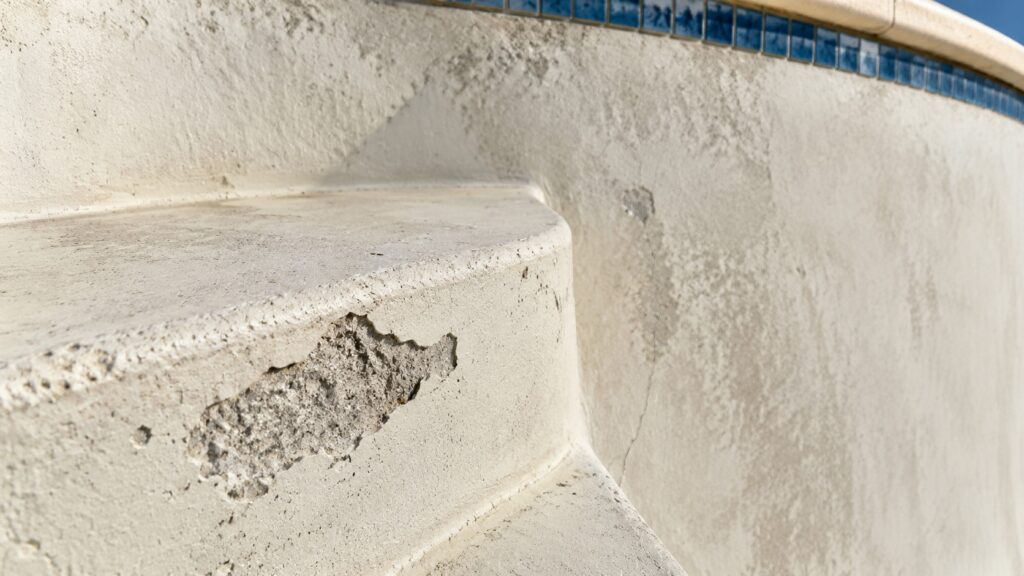
Plaster can separate from the shell beneath it. This is called delamination, and it shows up in a few ways. You might see patches where the finish has flaked or peeled away, exposing a different color underneath. Sometimes the surface bulges slightly, or a section sounds hollow when tapped with a pole. Small round pop offs that look like tiny craters are a related problem known as spalling.
Delamination usually traces back to problems at the time of application. The bond can fail if the shell was not properly prepared or the plaster went on over a dirty or wet surface. An inconsistent mix causes the same problem. Aggressive water chemistry accelerates the process by weakening the finish from the outside. Once a section of finish has lost its bond, water works its way behind it and the failure spreads.
There is no reliable repair for widespread delamination. Patching individual spots is possible, but the patches rarely match and the surrounding finish often continues to fail. When you can see multiple areas of flaking or find hollow sounding sections in several places, the finish needs to come off.
Sign 5: You Can See the Shell Underneath
This is the most obvious sign and the one that leaves no room for debate. When the finish has worn through completely, you will see the gray concrete or gunite of the shell showing through. In an aggregate finish, you may notice large areas where the pebbles or quartz have washed away and only bare cement paste remains. The worst cases show the reinforcing steel inside the shell, often surrounded by rust stains.
Exposed shell is a serious problem beyond appearance. The finish is what makes the pool watertight. Gunite and shotcrete are strong, but they are porous, and without a finish layer they allow water to migrate through. Exposed rebar will corrode, and rusting steel expands, which cracks the surrounding concrete and weakens the structure over time.
A pool in this condition should be resurfaced as soon as practical. The longer the shell stays exposed, the more damage accumulates. Your contractor is then more likely to find additional structural repairs once the old finish is removed.
Sign 6: Water Loss You Cannot Explain
Georgia pools lose water to evaporation, and in the heat of July and August that loss is substantial. As a general rule, a pool will lose somewhere around a quarter inch per day in hot, dry, windy conditions. Humid or overcast weather slows that down. If you are refilling far more often than that, something else is going on.
A simple bucket test can separate evaporation from a leak. Fill a bucket with pool water and set it on a step so it is partly submerged. Mark the water level inside the bucket and on the outside where it meets the pool. Leave it for a day or two with the pump running normally. Both levels should drop by the same amount from evaporation. If the pool level drops noticeably more than the bucket level, water is escaping somewhere.
Leaks come from many sources, including plumbing, fittings, light niches, and skimmers. A professional leak detection service can pinpoint the location. Sometimes the culprit is the finish itself. Cracks and delaminated sections allow water to seep through the shell. In a pool with visible surface deterioration, the finish is a prime suspect. Persistent unexplained water loss combined with any of the other signs in this list points strongly toward resurfacing. Ask for a thorough shell inspection while the old material is off.
Sign 7: Water Chemistry That Will Not Stay Balanced
Talk to any experienced pool owner in Georgia about water chemistry and you will hear a familiar story. Summer rain dilutes the water, heat burns through chlorine, and pollen and organic debris consume sanitizer. Some difficulty is normal. What is not normal is a pool that fights you no matter what you do.
A deteriorating finish contributes to chemistry problems in several ways. Rough and porous surfaces harbor algae and bacteria in places brushing cannot reach, which raises sanitizer demand. Etched plaster continues to shed calcium into the water, which can push calcium hardness up even as the surface degrades. Delaminated areas trap water and debris behind the finish, creating pockets where chemistry is unmanageable. Stains and scale on the surface can also indicate long term imbalance that has already done its damage.
Perhaps your chemical bills have climbed year after year, or algae returns within days of treatment. Maybe your test results swing wildly despite consistent maintenance. The surface may be the reason. Resurfacing gives you a smooth, dense, properly cured finish that is far easier to keep in balance. Many owners report that a new finish cuts their chemical use noticeably. The exact savings depend on the pool, the finish type, and the owner’s maintenance habits.
What Resurfacing Involves
Understanding the process helps you evaluate contractors and set expectations. A typical residential resurfacing job in Georgia follows these general steps.
The pool is drained. This must be done carefully, especially in areas with a high water table or clay soil that holds moisture. Draining a pool during or immediately after heavy rain can allow groundwater pressure to lift or crack the shell. Experienced contractors check conditions and may use a hydrostatic relief valve or wait for drier weather.
The old finish is removed or prepared. Depending on its condition, the existing surface may be chipped out entirely, sandblasted, or roughed up with a bond coat applied over it. Full chip out costs more but produces the most reliable bond for the new finish. Any cracks, hollow spots, or exposed steel in the shell are repaired at this stage.
The new finish is applied. Plaster, quartz, and pebble finishes are hand troweled by a crew over the course of a day. The pool is then refilled immediately and continuously, since allowing a fresh cement based finish to dry out causes cracking and discoloration.
Startup chemistry follows. The first several weeks after resurfacing are critical. New plaster releases calcium hydroxide as it cures, which drives pH up and can cause scale if not managed. Your contractor should provide a startup procedure. Following it closely is essential to the long term appearance and durability of the finish.
Choosing a Finish for Georgia Conditions
Several finish types are common in Georgia, and each has trade offs.
Standard white plaster is the traditional choice and the least expensive. It produces a classic light blue water color and a smooth surface. Plain plaster is also the least durable option and the most sensitive to water chemistry. In Georgia’s climate, with soft fill water and heavy seasonal chemical swings, standard plaster often shows wear earlier than owners expect. Industry sources commonly cite a lifespan of roughly seven to ten years, though actual results vary widely with maintenance.
Quartz aggregate finishes blend crushed quartz into the plaster. Because quartz is harder than the cement around it, the surface resists etching and staining better than plain plaster. These finishes come in a range of colors and typically last longer than standard plaster. Many manufacturers and installers suggest a range of ten to fifteen years under good care.
Pebble finishes use small, smooth stones set in cement. They are the most durable of the common options and hide stains and imperfections well. The surface texture is more pronounced, which some swimmers dislike, though polished pebble products soften the feel. Pebble finishes are often described as lasting fifteen years or more, again depending on maintenance.
Tile is the most durable and most expensive option for a full interior. It is uncommon for whole pool interiors in residential settings because of cost, but it remains the standard for waterlines and accents.
For most Georgia homeowners weighing cost against longevity, quartz and pebble finishes tend to offer the best balance. Their improved resistance to aggressive water is a meaningful advantage in a state where soft water and frequent rain dilution are the norm.
When to Schedule the Work
Timing matters in Georgia. Contractors are busiest in spring as owners rush to open pools, and lead times can stretch for weeks. Fall and early spring are often the best windows. The weather is mild enough for proper curing, the pool is not in heavy use, and crews have more availability.
Avoid scheduling during peak pollen season if you can. Fresh plaster is vulnerable in its first weeks, and heavy pollen loads make startup chemistry harder to manage. In north Georgia, also avoid periods with hard freezes. Freshly applied cement based finishes can be damaged by freezing temperatures before they cure. Your contractor will advise on the right window for your part of the state.
Final Thoughts
No pool finish fails overnight. It wears down gradually, and the signs are easy to dismiss one at a time. A little roughness here, a stain that will not budge there, a few extra bags of chemicals each month. Added together, they tell a clear story.
If you recognize two or three of the signs in this guide, it is worth having a qualified contractor inspect your pool. Catching surface failure early keeps the job to a resurfacing rather than a structural repair. It also gets your pool back to being the asset it should be. In a state with a swim season as long as Georgia’s, that is time well spent.