
If you own property in Metro Atlanta with a sloped backyard, you may have wondered whether building a swimming pool is even possible. The good news: it absolutely is. The nuanced reality: sloped lot pool construction comes with unique challenges that require careful planning, experienced contractors, and often a larger budget than flat-terrain installations. This guide walks through the considerations, obstacles, and engineering solutions specific to building pools on sloped properties in the Atlanta area and throughout Georgia.
Understanding Atlanta’s Terrain
The Atlanta metropolitan area sits within the Piedmont geological region, characterized by rolling hills, uneven terrain, and significant elevation changes across residential properties. Many neighborhoods in Buckhead, Sandy Springs, Alpharetta, Johns Creek, Marietta, and Roswell feature backyards with slopes ranging from gentle grades to steep hillsides. This terrain is part of what gives Atlanta its distinctive character, with homes often perched on hillsides offering views of tree canopies and surrounding landscapes.
However, this same topography that makes properties visually appealing can complicate pool construction significantly. A backyard that slopes away from the house, toward the house, or sideways across the property each presents distinct engineering considerations. Before beginning any pool project on a sloped lot, understanding the degree of slope and its direction relative to your home is the essential first step.
The Soil Factor: Georgia Red Clay
Perhaps no single factor affects pool construction in Metro Atlanta more than the region’s notorious red clay soil. This clay-rich earth, common throughout the Piedmont region, creates several complications for pool builders and homeowners alike.
Georgia red clay is composed of extremely fine mineral particles packed tightly together, leaving little space for air and water to move through. This dense composition creates soil that becomes heavy and sticky when wet, then hard and compacted when dry. For pool construction on sloped lots, this presents multiple concerns.
When wet, red clay expands. When dry, it contracts. This constant cycle of expansion and contraction throughout Georgia’s seasons can put stress on pool shells and surrounding structures. Pool contractors working in the Atlanta area must account for this soil behavior when designing foundations, retaining walls, and drainage systems. The clay’s poor drainage capabilities mean water can pool and accumulate behind retaining walls, creating hydrostatic pressure that can compromise structural integrity if not properly addressed.
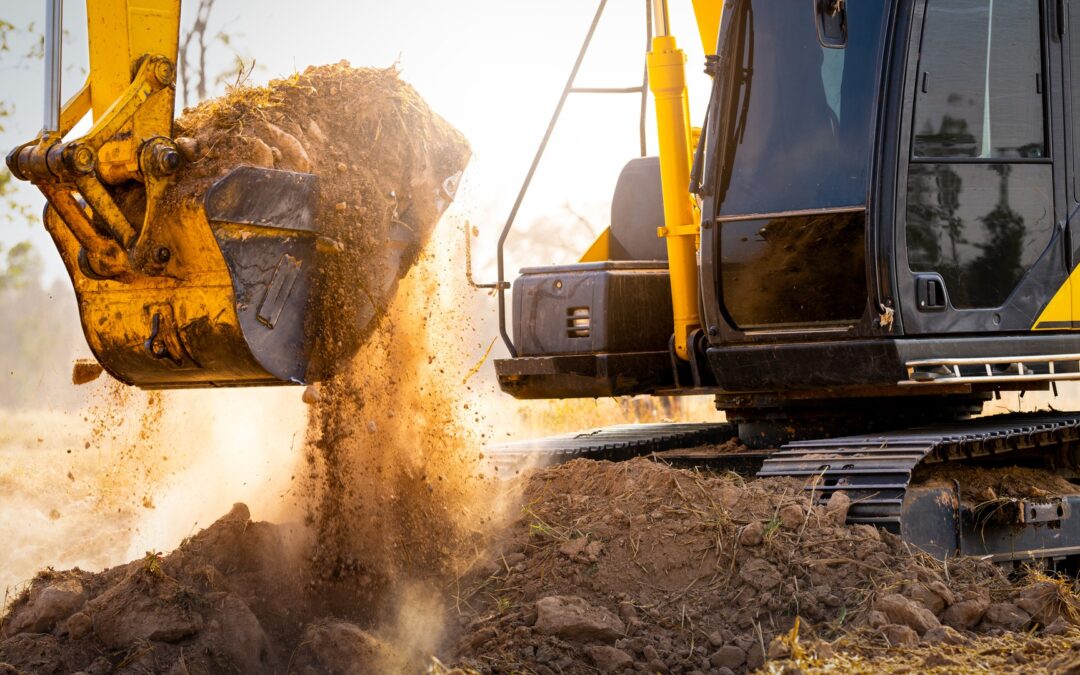
Excavation in Georgia red clay also requires specialized equipment and techniques. The soil can be difficult to dig when dry and becomes problematic when saturated. Experienced Atlanta-area pool contractors typically schedule excavation during drier periods when possible and avoid attempting to compact saturated clay soil, as it loses structural integrity when waterlogged.
Permit Requirements in Georgia
Before any ground is broken for a pool project in Georgia, permits must be obtained. The state follows the International Swimming Pool and Spa Code (ISPSC), which establishes minimum safety standards for pools. Local building departments enforce these regulations, with requirements varying somewhat between Fulton, Cobb, DeKalb, Gwinnett, and other Metro Atlanta counties.
In Georgia, all residential swimming pools require a building permit before construction begins. Most counties require permits for any pool deeper than 24 inches, including both in-ground and above-ground installations. Building without proper permits can result in fines or complications when selling your home in the future.
For sloped lot construction specifically, additional permitting considerations often come into play. A site plan showing the pool location, setbacks from property lines, fencing details, and drainage plans is typically required. If the project involves significant grading or land disturbance, erosion control permits may be necessary. The Georgia Soil and Water Conservation Commission oversees erosion and sedimentation control requirements statewide, and land-disturbing activities must comply with the Erosion and Sedimentation Act of 1975.
For properties with septic systems rather than municipal sewer connections, approval from the county health department is typically required before a pool permit can be issued. The location of the septic tank and drain field must be verified to ensure the pool installation will not interfere with these systems.
Within the City of Atlanta specifically, the Office of Buildings handles pool construction permits, and as of January 2026, all permit submissions must comply with the 2024 International Swimming Pool and Spa Code with Georgia Amendments. Projects in historic districts or areas with tree protection ordinances may face additional review requirements.
Safety Barrier Requirements
Georgia state law requires barriers around residential swimming pools. Understanding these requirements is essential when planning a pool on a sloped lot, as the terrain itself may impact how barriers are positioned.
All residential pools in Georgia must have a barrier at least 48 inches high surrounding the entire pool area. This barrier must be designed to prevent children from climbing over, under, or through it. Gates must be self-closing and self-latching, with latches placed at least 54 inches above ground level. Some jurisdictions allow the house itself to serve as part of the barrier if doors leading to the pool area have alarms or self-closing mechanisms.
On sloped properties, barrier installation becomes more complex. A fence that is 48 inches tall when measured from the pool deck side may be shorter when measured from the downhill side of the slope. Contractors and homeowners must ensure the barrier meets height requirements from all approaches, which sometimes necessitates stepped or terraced fence designs on hillside properties.
Engineering Solutions for Sloped Lots
Several construction approaches exist for building pools on sloped terrain, each with advantages and considerations depending on the specific property characteristics.
Retaining Walls
Retaining walls are among the most common solutions for sloped lot pool construction in Metro Atlanta. These structures hold back soil and prevent it from collapsing into the pool area, creating a level platform for the pool itself.
The type of retaining wall appropriate for a given project depends on the slope severity and the lateral pressure the wall must withstand. Gravity walls rely on their own mass and weight to resist soil pressure and are suitable for moderate inclines. Cantilever walls feature reinforced concrete with an overhang design and work well in limited-space situations. Anchored walls use tiebacks or anchors into the soil behind the wall for enhanced stability on steeper grades.
Materials for retaining walls in the Atlanta area commonly include poured concrete, natural stone, manufactured concrete blocks, and brick. Each material has different cost implications, aesthetic characteristics, and structural properties. Natural stone provides a timeless look that blends well with Georgia’s natural landscapes, while concrete block systems offer durability and design flexibility.
Proper drainage is absolutely essential for retaining wall longevity. Without adequate drainage systems, water accumulates behind the wall and creates hydrostatic pressure that can cause the wall to bulge, crack, or collapse over time. Atlanta’s climate, with its periodic heavy rainfall, makes drainage planning particularly important. Weep holes, French drains, and perforated pipe systems are commonly incorporated to channel water away from retaining walls.
Retaining walls in Georgia that exceed certain heights typically require engineering certification and multiple inspections during construction. Inspectors generally verify the footing, rebar and concrete forms, and the final installation with backfill completed according to the engineer’s specifications.
Terracing
For properties with longer, more gradual slopes, terracing offers both a functional and aesthetically pleasing solution. Rather than a single tall retaining wall, terracing creates a series of shorter walls stepping up or down the hillside. Each terrace creates a flat area that can serve different purposes: one level for the pool, another for a deck or patio, perhaps another for landscaping.
Terraced designs can transform what might be seen as a challenging backyard into a visually striking, multi-level outdoor living space. The terraces themselves can incorporate seating walls, planters, or lighting elements that add both function and design interest.
From a structural standpoint, multiple shorter walls can sometimes be more stable than a single tall wall, as each wall bears less lateral pressure. However, terraced construction requires careful planning to ensure proper drainage throughout all levels and coordination between different structural elements.
Hillside and Semi-Inground Pools
Some sloped properties lend themselves to pool designs that partially emerge from the hillside rather than being fully buried in the ground. These semi-inground or hillside installations have the pool shell set into the slope on the uphill side while the downhill side rises above grade.
This approach can reduce the amount of excavation required and may work well on moderate slopes where cutting entirely into the hillside would be impractical or prohibitively expensive. The exposed portion of the pool can be finished with stone, stucco, or other materials to complement the home’s architecture.
Infinity Edge and Vanishing Edge Pools
Sloped lots are actually ideal candidates for infinity edge pools, where one or more sides of the pool meet the waterline exactly, creating the illusion of water extending to the horizon. The pool is equipped with a catch basin that collects water flowing over the lowered edge, which is then pumped back into the pool.
Because infinity pools require the vanishing edge to be positioned where it can create a visual effect against the backdrop, hillside properties overlooking tree canopies, lakes, or distant views are prime locations for this pool style. The natural slope provides the elevation difference needed for the infinity effect to work properly.
However, infinity pools cost significantly more than standard pools due to their more complex engineering, additional pumping systems, and the catch basin construction required. In Metro Atlanta, infinity pool installations can range from around $95,000 for more modest designs to well over $200,000 for luxury installations with premium finishes.
Cost Considerations
Building a pool on a sloped lot in Metro Atlanta will typically cost more than building on flat terrain. Several factors contribute to this premium.
Excavation costs increase when working on slopes because soil cannot simply be spread around the property as it might be on flat land. Fill material may need to be hauled away, or conversely, additional fill may need to be brought in to create level areas. Georgia’s red clay can make excavation more challenging than other soil types, potentially requiring specialized equipment.
Retaining wall construction adds substantial cost to sloped lot pool projects. The expense depends on wall height, length, materials chosen, and whether engineering certification is required. Walls over a certain height in many Georgia jurisdictions require stamped engineering drawings and inspections, adding both professional fees and permitting costs.
Drainage systems necessary to protect both the pool and retaining structures represent another cost category that may be minimal or absent in flat-lot installations but essential for sloped properties. French drains, catch basins, and proper grading all factor into the budget.
In the Atlanta area, inground pool construction on typical flat lots generally ranges from around $50,000 to over $100,000 depending on size, materials, and features. For sloped lots requiring retaining walls, terracing, or other specialized construction, total project costs can increase by $15,000 to $50,000 or more above what the same pool would cost on flat terrain. Complex hillside installations with extensive engineering requirements can push total project costs well beyond $150,000.
That said, some Atlanta-area pool contractors note that sloped lots do not automatically mean higher costs if the excavated soil can be repurposed on-site. If dirt from the pool excavation can be spread to reduce grade differences elsewhere on the property, this can offset some costs that would otherwise go toward hauling material away.
Erosion Control Requirements
Georgia takes erosion control seriously, particularly given the state’s clay soils and occasional heavy rainfall events. Pool construction on sloped lots must address erosion prevention both during and after construction.
The Georgia Soil and Water Conservation Commission publishes the Manual for Erosion and Sediment Control in Georgia, which serves as the reference standard for erosion prevention practices. While residential pool projects may not trigger the full permitting requirements that larger land disturbance projects face, contractors are still expected to implement best management practices to prevent sediment from leaving the construction site.
On sloped properties, these practices become more critical. Silt fencing, erosion control blankets, and proper water diversion strategies help prevent soil loss during construction. Once the pool is complete, permanent landscaping, hardscaping, and drainage features must be designed to prevent ongoing erosion issues.
Properties that disturb one acre or more of land require coverage under Georgia’s NPDES (National Pollutant Discharge Elimination System) General Permit for stormwater discharges from construction activities. While most residential pool projects fall below this threshold, properties where pool construction is combined with extensive landscaping, driveway work, or other improvements could potentially reach the one-acre trigger.
Selecting a Contractor
Choosing the right contractor for a sloped lot pool project in Metro Atlanta is perhaps the most consequential decision homeowners will make. Not all pool builders have equivalent experience with the engineering challenges that sloped terrain presents.
When evaluating contractors, ask specifically about their experience with hillside or sloped lot installations. Request references from previous clients whose properties had similar terrain challenges. Look for contractors who can explain how they approach drainage, what types of retaining wall systems they prefer and why, and how they work with Georgia’s clay soil conditions.
A qualified contractor should be able to walk through the permitting process and explain what approvals will be needed for your specific property and municipality. They should be transparent about the additional costs that sloped lot construction entails and provide detailed proposals that break out line items for grading, retaining walls, drainage systems, and other slope-related work.
In Georgia, pool construction often falls under the Outdoor Environment Limited Service Specialty Contractor classification, though some projects may warrant a general contractor depending on scope. Verify that any contractor you consider is properly licensed and insured for the work they will be performing.
Working with Your Property’s Natural Features
Rather than viewing a sloped lot as purely a challenge to overcome, experienced designers can incorporate the terrain into a pool design that would not be possible on flat land. Elevated pool decks can offer views that neighbors with flat backyards cannot enjoy. Natural rock outcroppings on hillside properties can be integrated into pool surrounds. Water features like waterfalls work naturally with grade changes.
The excavated material from pool construction on a slope can sometimes be repurposed to create raised planting beds, berms for privacy screening, or level areas for outdoor living spaces elsewhere on the property. Working with the land rather than fighting against it entirely can yield better aesthetic results and sometimes reduce overall project costs.
Timeline Expectations
Pool construction in Metro Atlanta typically requires eight to twelve weeks from design approval through completion, though this timeline can extend for more complex projects. Sloped lot installations generally fall on the longer end of this range due to the additional structural work involved.
Weather can significantly impact construction schedules, particularly for work involving Georgia’s clay soil. Saturated soil cannot be properly compacted, meaning significant rainfall can delay excavation and grading phases. Many contractors recommend beginning the process in fall or winter to take advantage of typically drier conditions and to have the pool ready for use by the following summer.
Permitting timelines vary by jurisdiction. Within the City of Atlanta, pool permit applications go through the Office of Buildings, and processing times depend on current workload and whether any issues arise during plan review. Allow several weeks for permit processing in your overall project timeline.
Long-Term Considerations
A pool on a sloped lot requires the same ongoing maintenance as any pool: chemical balancing, cleaning, equipment inspection, and periodic resurfacing or other repairs. However, the retaining walls, drainage systems, and other structural elements associated with sloped lot construction also require attention over time.
Retaining walls should be periodically inspected for signs of movement, cracking, or drainage problems. Weep holes and French drains need to be kept clear of debris to function properly. The soil behind retaining walls can settle over time, potentially requiring attention.
Georgia’s freeze-thaw cycles, while milder than northern states, can still affect masonry and concrete over time. Proper construction techniques and materials help minimize these effects, but long-term durability depends on quality workmanship during initial installation.
Final Thoughts
Building a pool on a sloped lot in Metro Atlanta is entirely feasible with proper planning, experienced contractors, and realistic budget expectations. The challenges are real: Georgia’s clay soil, terrain-driven drainage concerns, structural requirements for retaining walls, and permitting complexities all add layers to the project that flat-lot installations do not face.
However, the results can be spectacular. A pool that takes advantage of a hillside setting, incorporates thoughtful terracing, or features a vanishing edge overlooking mature trees can become the centerpiece of an outdoor living space that simply is not achievable on flat land.
The key is approaching the project with eyes open to both the challenges and opportunities that sloped terrain presents. Work with contractors who have specific experience with Metro Atlanta’s geology and construction conditions. Plan thoroughly before breaking ground. And budget realistically for the additional work that hillside construction requires.